Triethylamine → HCID 23042063, compound
Reaction equation

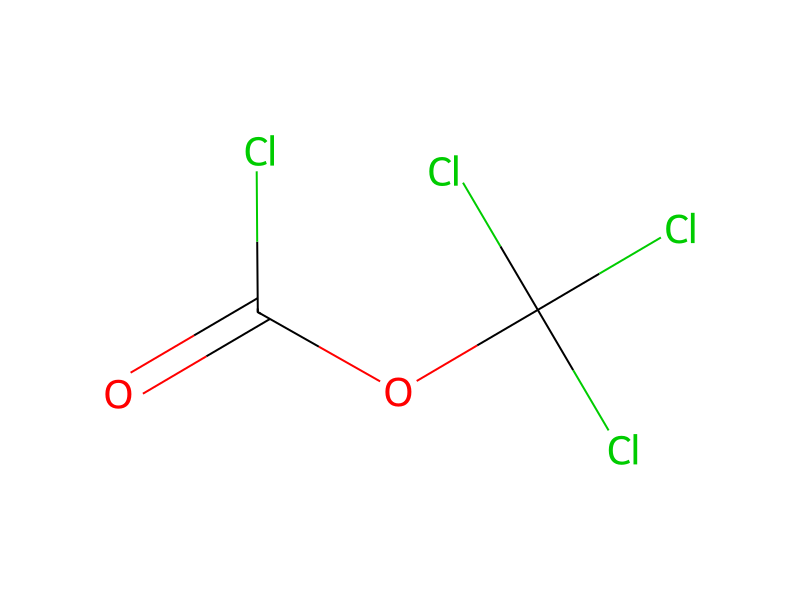
Cl[C:2](OC(Cl)(Cl)Cl)=[O:3].[F:9][C:10]1[CH:26]=[CH:25][CH:24]=[C:23]([F:27])[C:11]=1[C:12]([NH:14][NH:15][C:16]1[CH:21]=[CH:20][CH:19]=[CH:18][C:17]=1[Br:22])=[O:13].C(N(CC)CC)C>O1CCOCC1>[Br:22][C:17]1[CH:18]=[CH:19][CH:20]=[CH:21][C:16]=1[N:15]1[N:14]=[C:12]([C:11]2[C:10]([F:9])=[CH:26][CH:25]=[CH:24][C:23]=2[F:27])[O:13][C:2]1=[O:3]Participants
Reactant 3


Product 1

Reagents, catalysts & solvents 1

Procedure
2.3 ml (19 mmol) of trichloromethyl chloroformate are added dropwise at 10°-20° C. to a mixture of 5.34 g (16 mmol) of 2,6-difluoro-N'-(o-bromophenyl)-benzhydrazide and 5.50 ml (40 mmol) of triethylamine in 35 ml of dioxan. The reaction mixture is heated at the reflux temperature for a further 3 hours and the solvent and excess reagent are subsequently distilled off under reduced pressure. The residue is taken up in diethyl ether and the solution is washed in each case once with water and sodium bicarbonate solution, dried over anhydrous sodium sulfate and evaporated under reduced pressure. After crystallization of the residue from acetone/n-hexane there is obtained pure 3-(2-bromophenyl)-5-(2,6-difluorophenyl)-1,3,4-oxadiazol-2(3H)-one, m.p. 111°-114° C.; IR spectrum: 1790 cm-1 ; mass spectrum: 354/352(15), 310/308(7), 171/169(41), 90(100).
Workup
- temperatureThe reaction mixture is heated at the reflux temperature for a further 3 hours
- distillationthe solvent and excess reagent are subsequently distilled off under reduced pressure
- washthe solution is washed in each case once with water and sodium bicarbonate solution
- dry with materialdried over anhydrous sodium sulfate
- customevaporated under reduced pressure
- customAfter crystallization of the residue from acetone/n-hexane there
Sources & evidence
- ORD record
- ord-b8f51c6db1be4d9c86102d8eeb068497
- Source dataset
- uspto-grants-1990_07
- Patent number
- US04943583
Reaction notes
Loading…