Water → HCID 67032474, compound
Reaction equation

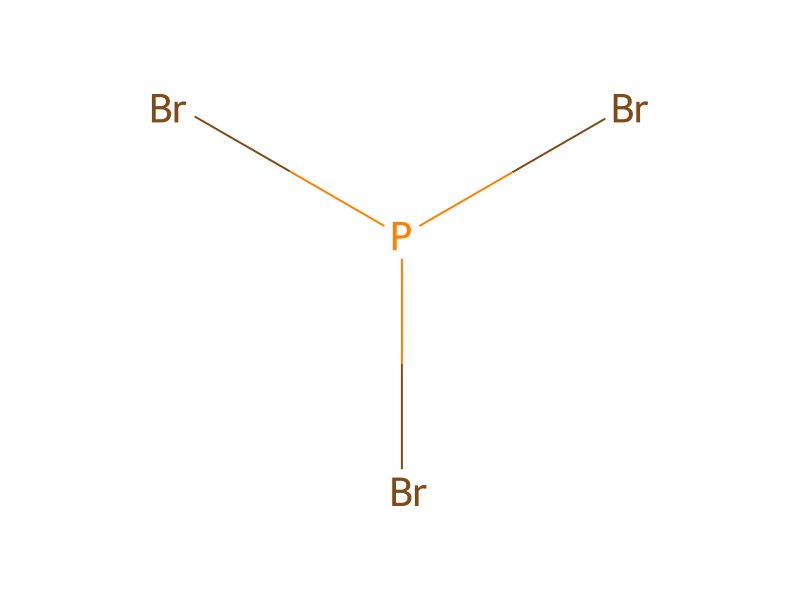
[Cl:1][C:2]1[C:7]([CH2:8][CH3:9])=[CH:6][CH:5]=[C:4]([Cl:10])[C:3]=1[CH2:11]O.P(Br)(Br)[Br:14].O.C([O-])(O)=O.[Na+]>CCOCC.CCOC(C)=O>[Br:14][CH2:11][C:3]1[C:2]([Cl:1])=[C:7]([CH2:8][CH3:9])[CH:6]=[CH:5][C:4]=1[Cl:10]Participants






Conditions
- Temperature
- 0 °C
Procedure
The required 2-bromomethyl-1,3-dichloro-4-ethyl-benzene was prepared as follows: To a mixture of 2′,4′-dichloroacetophenone (4.85 g; 25.66 mmol) suspended in diethylene glycol (20 mL) was added KOH (2.37 g; 35.92 mmol) and hydrazine hydrate (2.9 mL). The resulting mixture was heated at 100° C. (for 1 hour) and subsequently overnight, at 200° C. After cooling to RT, the mixture was partitioned between Et2O and water. The layers were separated and the organic layer was dried (Na2SO4), filtered, and concentrated in vacuo. The residue was purified by column chromatography (SiO2, hexanes) to afford the product: 2,4-dichloro-1-ethylbenzene (2.24 g). To a solution 2,2,6,6-tetramethylpiperidine (2.36 mL; 14 mmol), dissolved in THF (40 ml) was added a solution of n-BuLi in hexanes (5.6 mL; 2.50 mol/l; 14 mmol), at −78° C. The reaction mixture was stirred for 90 minutes, allowing the temperature to reach 0° C. Subsequently, a solution of 2,4-dichloro-1-ethylbenzene (2.23 g; 12.74 mmol), dissolved in THF (5 mL) was added at −78° C. The resulting mixture was stirred for 2.5 hours. Subsequently, DMF (1.48 mL; 19.11 mmol) was added dropwise and the resulting mixture was stirred for 30 minutes. The reaction was quenched by the addition of a saturated aqueous NH4Cl solution, at −50° C. The resulting mixture was extracted with Et2O. The combined organic layers were dried (Na2SO4), filtered, and concentrated in vacuo to afford the crude 2,6-dichloro-3-ethylbenzaldehyde, which was redissolved in MeOH (100 mL). Subsequently, NaBH4 (1.45 g; 38.22 mmol) was added, in small portions, at 0° C. After the addition was complete the mixture was allowed to warm to RT and stirred for one hour. Subsequently, the mixture was cooled to 0° C., water was added, and the MeOH evaporated in vacuo. To the aqueous solution was added a 5% aqueous NaHCO3 solution and Et2O. The layers were separated and the organic layer was dried (Na2SO4), filtered and concentrated in vacuo. The residue was purified by column chromatography (SiO2, Et2O:hexanes 1:7 followed by 1:1) to afford (2,6-dichloro-3-ethylphenyl)methanol (2.11 g). To a solution of (2,6-dichloro-3-ethylphenyl)methanol (0.79 g; 3.85 mmol) in Et2O (25 mL) was added dropwise PBr3 (0.47 ml; 5.01 mmol), at 0° C., and the resulting mixture was stirred overnight, at RT. Subsequently, water was added, at 0° C., followed by EtOAc en 5% aqueous NaHCO3. The layers were separated and the organic layer was dried (MgSO4), filtered, and concentrated in vacuo to afford 2-bromomethyl-1,3-dichloro-4-ethylbenzene (0.57 g), which was used as such.
Workup
- customThe layers were separated
- dry with materialthe organic layer was dried (MgSO4)
- filtrationfiltered
- concentrationconcentrated in vacuo
Sources & evidence
- ORD record
- ord-91b5536f199a4d2b9220d27b44e8f2d2
- Source dataset
- uspto-grants-2015_06
- Patent number
- US09045441B2
Reaction notes
Loading…