Carbazole → HCID 58084636, compound
Reaction equation

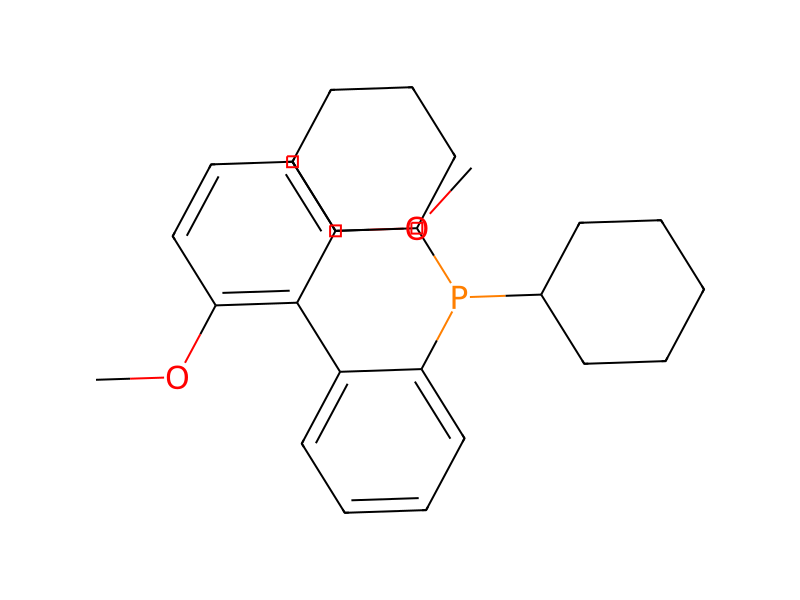
[CH:1]1[C:13]2[NH:12][C:11]3[C:6](=[CH:7][CH:8]=[CH:9][CH:10]=3)[C:5]=2[CH:4]=[CH:3][CH:2]=1.I[C:15]1[C:20]2[S:21][C:22]3[CH:27]=[CH:26][CH:25]=[CH:24][C:23]=3[C:19]=2[CH:18]=[CH:17][CH:16]=1.C1(P(C2CCCCC2)C2C=CC=CC=2C2C(OC)=CC=CC=2OC)CCCCC1.CC(C)([O-])C.[Na+]>C1(C)C(C)=CC=CC=1>[CH:18]1[C:19]2[C:23]3[CH:24]=[CH:25][CH:26]=[CH:27][C:22]=3[S:21][C:20]=2[C:15]([N:12]2[C:11]3[CH:10]=[CH:9][CH:8]=[CH:7][C:6]=3[C:5]3[C:13]2=[CH:1][CH:2]=[CH:3][CH:4]=3)=[CH:16][CH:17]=1Participants
6





Procedure
Carbazole (0.62 g, 3.67 mmol) and 4-iododibenzothiophene (1.2 g, 3.87 mmol) were mixed in 70 mL of dry xylene. The solution was bubbled nitrogen while stirring for 15 minutes. Pdz(dba)3 (0.16 g, 0.17 mmol), 2-dicyclohexylphosphino-2′,6′-dimethoxybiphenyl (0.24 g, 0.58 mmol) and sodium tert-butoxide (1.0 g, 10.4 mmol) were added in sequence. The mixture was heated to reflux for 3 days under nitrogen. After cooling, the reaction mixture was filtered through a Celite®/silica pad and the solvent was then evaporated. The residue was then purified by column chromatography using DCM:hexane (1:4, v/v) as the eluent to obtain 0.64 g of product.
Workup
- customThe solution was bubbled nitrogen
- temperatureThe mixture was heated
- temperatureto reflux for 3 days under nitrogen
- temperatureAfter cooling
- filtrationthe reaction mixture was filtered through a Celite®/silica pad
- customthe solvent was then evaporated
- customThe residue was then purified by column chromatography
Sources & evidence
- ORD record
- ord-227b7c96643746bbacd5b488703af503
- Source dataset
- uspto-grants-2015_06
- Patent number
- US09054323B2
Reaction notes
Loading…