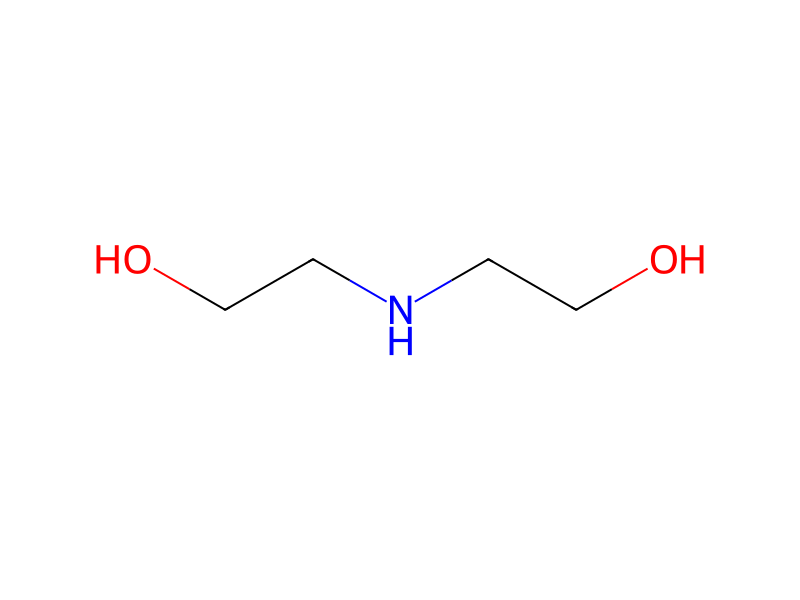
Diethanolamine → HCID 71533325, compound
Reaction equation

[N:1]1[NH:2][C:3]([NH:6][C:7]([C:9]2[C:14]([NH2:15])=[N:13][C:12]([C:16]([F:19])([F:18])[F:17])=[C:11](Br)[N:10]=2)=[O:8])=[CH:4][CH:5]=1.[NH:21]([CH2:25]CO)[CH2:22]CO>CN(C=O)C>[N:1]1[NH:2][C:3]([NH:6][C:7]([C:9]2[C:14]([NH2:15])=[N:13][C:12]([C:16]([F:19])([F:18])[F:17])=[C:11]([N:21]([CH3:25])[CH3:22])[N:10]=2)=[O:8])=[CH:4][CH:5]=1Participants
4
Reactant 2

Product 1

Reagents, catalysts & solvents 1

Conditions
- Temperature
- 100 °C
Procedure
To a stirring solution of 3-amino-6-bromo-5-trifluoromethyl-pyrazine-2-carboxylic acid (2H-pyrazol-3-yl)-amide (Ex. 7)(50 mg, 0.142 mmol) in dry DMF (5 ml), diethanolamine (37.4 mg, 0.356 mmol) was added. The resulting solution was heated at 100° C. using microwave radiation for 66 hours. The reaction mixture was partitioned between EtOAc (20 ml) and water (20 ml), and the phases separated. The organic phase was washed with brine (10 ml), dried (MgSO4) and concentrated in vacuo to give an orange solid. Purification of the crude product by chromatography on silica eluting with iso-hexane/EtOAc (gradient of 0 to 50% EtOAc) yielded the title compound as a yellow solid.
Workup
- customfor 66 hours
- customThe reaction mixture was partitioned between EtOAc (20 ml) and water (20 ml)
- customthe phases separated
- washThe organic phase was washed with brine (10 ml)
- dry with materialdried (MgSO4)
- concentrationconcentrated in vacuo
- customto give an orange solid
- customPurification of the crude product by chromatography on silica eluting with iso-hexane/EtOAc (gradient of 0 to 50% EtOAc)
Sources & evidence
- ORD record
- ord-94d698fc57624c8dacbbec3de796c58b
- Source dataset
- uspto-grants-2015_06
- Patent number
- US09056867B2
Reaction notes
Loading…