Sodium Hydroxide → 2-Methyl-5-nitro-1-(4-nitrophenoxycarbonyl)indole
Reaction equation

[CH3:1][C:2]1[NH:3][C:4]2[C:9]([CH:10]=1)=[CH:8][C:7]([N+:11]([O-:13])=[O:12])=[CH:6][CH:5]=2.[OH-].[Na+].Cl[C:17]([O:19][C:20]1[CH:25]=[CH:24][C:23]([N+:26]([O-:28])=[O:27])=[CH:22][CH:21]=1)=[O:18]>[Br-].C([N+](CCCC)(CCCC)CCCC)CCC.ClCCl>[CH3:1][C:2]1[N:3]([C:17]([O:19][C:20]2[CH:21]=[CH:22][C:23]([N+:26]([O-:28])=[O:27])=[CH:24][CH:25]=2)=[O:18])[C:4]2[C:9]([CH:10]=1)=[CH:8][C:7]([N+:11]([O-:13])=[O:12])=[CH:6][CH:5]=2Participants
6

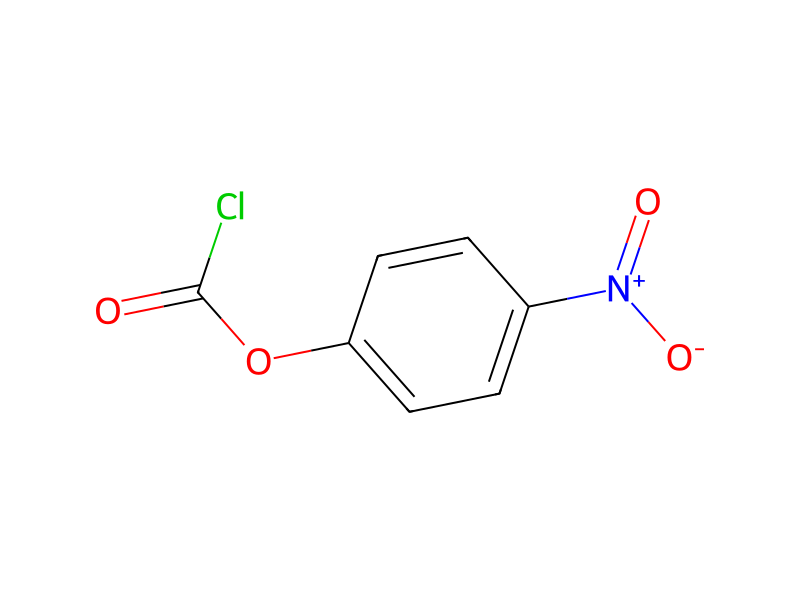




Procedure
2-methyl-5-nitroindole (2 g, 8.78 mmol) was dissolved into 80 ml of dichloromethane, and then sodium hydroxide (1.1 g, 26.36 mmol), tetrabutylammonium bromide (32 mg, 0.87 mmol), and 4-nitrophenyl chloroformate (1.86 g, 9.22 mmol) were sequentially added followed by stirring at room temperature for 1 hour. After filtering out the solid made in the reaction, the reaction mixture was washed with dichloromethane. The resultant liquid layer was concentrated and 2-methyl-5-nitro-1-(4-nitrophenoxycarbonyl)indole (2.9 g, 96%) was obtained as yellow solid.
Workup
- filtrationAfter filtering out the solid
- custommade in the reaction
- washthe reaction mixture was washed with dichloromethane
- concentrationThe resultant liquid layer was concentrated
Sources & evidence
- ORD record
- ord-8ef8932bf6d847d99f7e6b8552d67ade
- Source dataset
- uspto-grants-2015_06
- Patent number
- US09062066B2
Reaction notes
Loading…