Ammonium Chloride → HCID 58418632, compound
Reaction equation

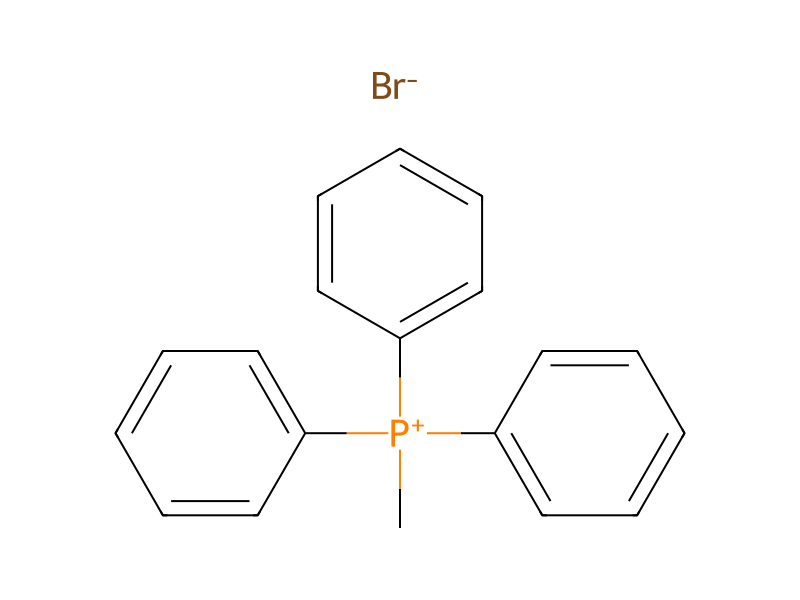
[Li][CH2:2]CCC.[CH3:6][N:7]1[CH2:12][CH2:11][N:10]([C:13]2[CH:20]=[CH:19][C:16]([CH:17]=O)=[CH:15][CH:14]=2)[CH2:9][CH2:8]1.[NH4+].[Cl-]>[Br-].C[P+](C1C=CC=CC=1)(C1C=CC=CC=1)C1C=CC=CC=1.C1COCC1>[CH3:6][N:7]1[CH2:12][CH2:11][N:10]([C:13]2[CH:20]=[CH:19][C:16]([CH:17]=[CH2:2])=[CH:15][CH:14]=2)[CH2:9][CH2:8]1Participants
6





Procedure
Dropwise, 39 ml of n-BuLi (1.7 M, 66 mmol) was added to a stirred, cold (0° C.) solution of methyltriphenylphosphonium bromide (23.2 g, 65 mmol) in 100 ml of THF (dried) under N2. After 15 min, a solution of 4-(4-methylpiperazinyl)benzaldehyde (11.9 g, 58 mmol) in 30 ml of THF was added dropwise via needle. The yellow suspension was stirred for 4 hours and treated with NH4Cl. The solution was filtered and concentrated under vacuum. The residue was purified by silica gel column chromatography elution with hexane, EtOAc, and Et3N in a 70:20:10 ratio to yield 10.6 g (90%) of white solid product. Without being bound by theory, it is believed that the following reaction took place.
Workup
- filtrationThe solution was filtered
- concentrationconcentrated under vacuum
- customThe residue was purified by silica gel column chromatography elution with hexane, EtOAc, and Et3N in a 70:20:10 ratio
Sources & evidence
- ORD record
- ord-3c7bf02fa7b345c0938f20320e9a7be6
- Source dataset
- uspto-grants-2015_06
- Patent number
- US09062144B2
Reaction notes
Loading…