1,5-Dibromopentane → 1-[(5-Bromopentyl)oxy]-3-nitrobenzene
Reaction equation

[N+:1]([C:4]1[CH:5]=[C:6]([OH:10])[CH:7]=[CH:8][CH:9]=1)([O-:3])=[O:2].[Br:11][CH2:12][CH2:13][CH2:14][CH2:15][CH2:16]Br.C(=O)([O-])[O-].[K+].[K+]>CN1CCCC1=O>[Br:11][CH2:12][CH2:13][CH2:14][CH2:15][CH2:16][O:10][C:6]1[CH:7]=[CH:8][CH:9]=[C:4]([N+:1]([O-:3])=[O:2])[CH:5]=1Participants
5
Reactant 3

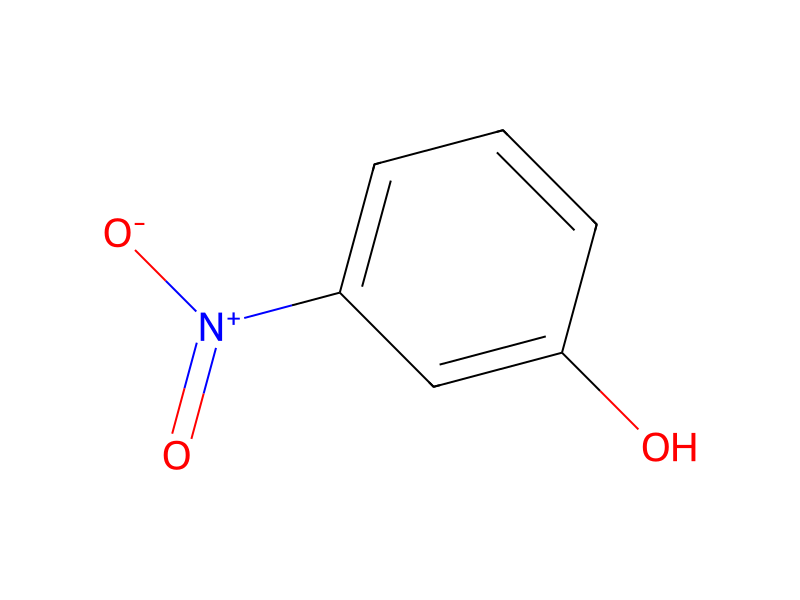

Product 1

Reagents, catalysts & solvents 1

Conditions
- Temperature
- 90 °C
Procedure
To a stirred solution of 3-nitrophenol (4.17 g, 30.0 mmol) and 1,5-dibromo-pentane (7.59 g, 33.0 mmol) in N-methylpyrolidinone (100 mL) was added potassium carbonate (6.21 g, 45.0 mmol), and the resulting mixture was stirred at 90° C. for 6 hours. The reaction mixture was quenched with water (30 mL) followed by extraction with ethyl acetate (30 mL×3). The combined organic layers were washed with brine and then concentrated under vacuum. The residue was purified by silica gel column chromatography to give 1-(5-bromo-pentyloxy)-3-nitro-benzene (5.10 g, 17.7 mmol, 59%) as a yellow liquid.
Workup
- customThe reaction mixture was quenched with water (30 mL)
- extractionfollowed by extraction with ethyl acetate (30 mL×3)
- washThe combined organic layers were washed with brine
- concentrationconcentrated under vacuum
- customThe residue was purified by silica gel column chromatography
Sources & evidence
- ORD record
- ord-1e3fad01da4a41c490cb2e2c84e4ca30
- Source dataset
- uspto-grants-2012_06
- Patent number
- US08198284B2
Reaction notes
Loading…