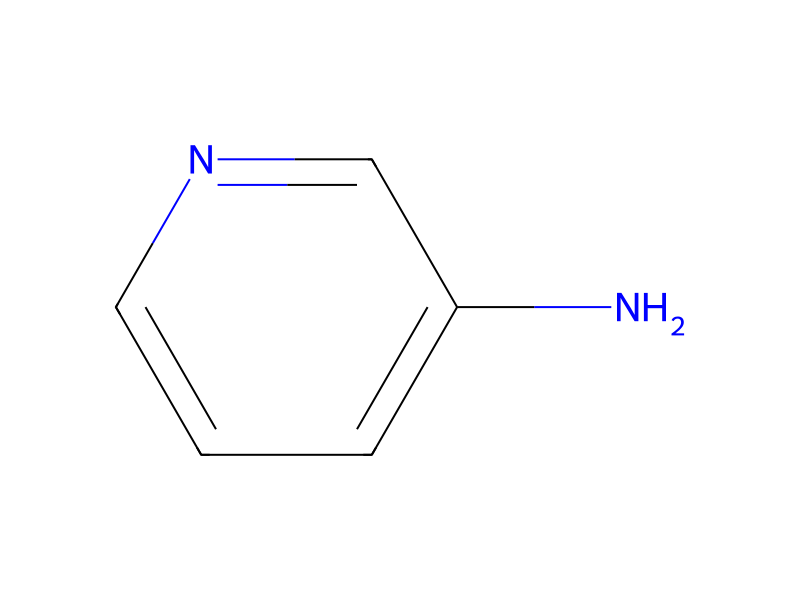
3-Aminopyridine → 3-Amino-6-bromo-N-pyridin-3-ylpyrazine-2-carboxamide
Reaction equation

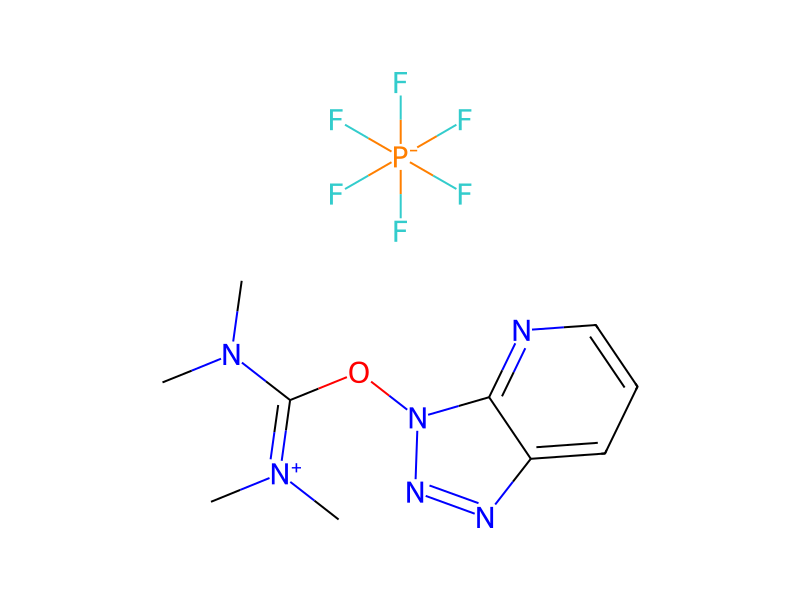
[NH2:1][C:2]1[C:3]([C:9]([OH:11])=O)=[N:4][C:5]([Br:8])=[CH:6][N:7]=1.[NH2:12][C:13]1[CH:14]=[N:15][CH:16]=[CH:17][CH:18]=1.CN(C(ON1N=NC2C=CC=NC1=2)=[N+](C)C)C.F[P-](F)(F)(F)(F)F>CN(C=O)C>[NH2:1][C:2]1[C:3]([C:9]([NH:12][C:13]2[CH:14]=[N:15][CH:16]=[CH:17][CH:18]=2)=[O:11])=[N:4][C:5]([Br:8])=[CH:6][N:7]=1Participants
5
Reactant 3

Product 1

Reagents, catalysts & solvents 1

Procedure
To a solution of the product of step (iv) (100 g, 0.45 mol) in DMF (350 mL) was added TEA (129 mL, 0.91 mol) and 3-aminopyridine (42.3 g, 0.45 mol). HATU (174 g, 0.45 mol) was added to the solution portionwise. The suspension was filtered, washed with water and dried under a reduced pressure to afford the subtitle compound (v) as a yellow solid (105 g).
Workup
- filtrationThe suspension was filtered
- washwashed with water
- customdried under a reduced pressure
Sources & evidence
- ORD record
- ord-27e1bc192fcf4223a0e32d07d6ecb165
- Source dataset
- uspto-grants-2012_06
- Patent number
- US08198285B2
Reaction notes
Loading…