Ethylene Glycol → 1-Phenylpyrrolidin-2-one
Reaction equation

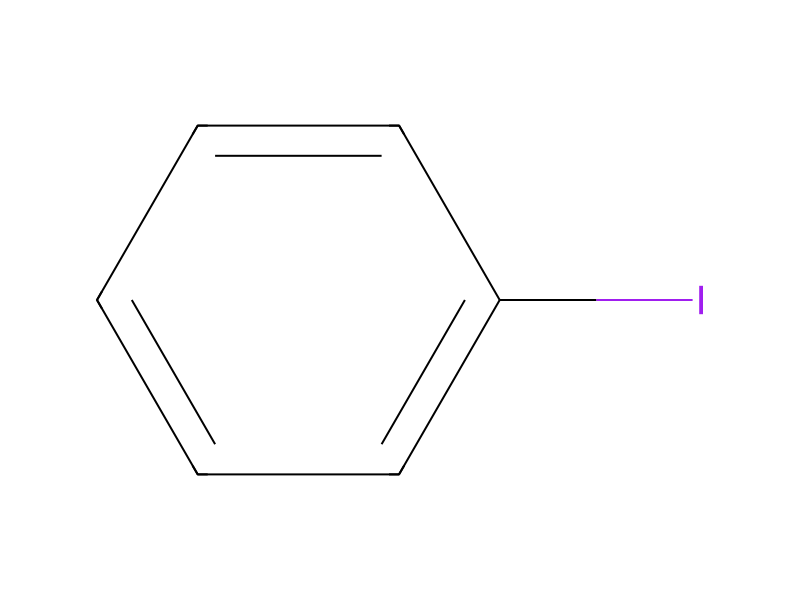
[O-]P([O-])([O-])=O.[K+].[K+].[K+].[NH:9]1[CH2:13][CH2:12][CH2:11][C:10]1=[O:14].I[C:16]1[CH:21]=[CH:20][CH:19]=[CH:18][CH:17]=1.C(O)CO>[Cu]I.CCCCCC.C(OCC)(=O)C.CC(O)C>[C:16]1([N:9]2[CH2:13][CH2:12][CH2:11][C:10]2=[O:14])[CH:21]=[CH:20][CH:19]=[CH:18][CH:17]=1Participants
8
Reactant 4



Product 1

Reagents, catalysts & solvents 3



Procedure
The general procedure under argon was followed using copper(I) iodide (10 mg, 0.05 mmol), K3PO4 (425 mg, 2.00 mmol), 2-pyrrolidinone (91 μL, 1.20 mmol), Iodobenzene (112 μL, 1.00 mmol), ethylene glycol (111 μL, 2.00 mmol) and 2-propanol (1.0 mL) at 90° C. Column chromatography using a solvent mixture (hexane/ethyl acetate=1/1) afforded N-(phenyl)-2-pyrrolidinone (80 mg, 50% isolated yield) as white solid. The spectral data (1H NMR) matched with the literature references and GC analysis indicated >95% purity. See Yin, J.; Buchwald, S. L. Org. Lett. 2000, 2, 1101-1104; and Kang, S.-K.; Lee, S.-H.; Lee, D. Synlett 2000, 1022-1024.
Workup
- customat 90° C
Sources & evidence
- ORD record
- ord-9442fa1e0bda4b7f86e16e98c8a8d2a5
- Source dataset
- uspto-grants-2015_06
- Patent number
- US09067955B2
Reaction notes
Loading…