Ethyl bromoacetate → Ethyl (4-cyanophenoxy)acetate
Reaction equation

[C:1]([C:3]1[CH:8]=[CH:7][C:6]([OH:9])=[CH:5][CH:4]=1)#[N:2].Br[CH2:11][C:12]([O:14][CH2:15][CH3:16])=[O:13].C([O-])([O-])=O.[K+].[K+]>CC(C)=O>[C:1]([C:3]1[CH:8]=[CH:7][C:6]([O:9][CH2:11][C:12]([O:14][CH2:15][CH3:16])=[O:13])=[CH:5][CH:4]=1)#[N:2]Participants
5
Reactant 3


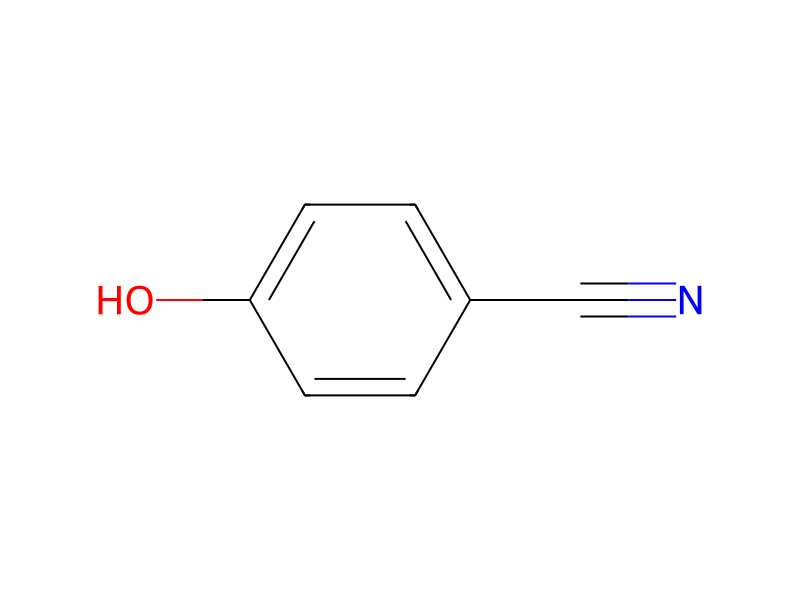
Product 1

Reagents, catalysts & solvents 1

Procedure
A mixture of 22.16 g (0.186 mol) of 4-cyanophenol, 32.07 g (0.192 mol) of ethyl bromoacetate, 27.6 g (0.199 mol) of K2CO3 and acetone (250 ml) is stirred at room temperature for 12 hours. After filtration, the solvent is evaporated off under vacuum and the residue is partitioned between an organic phase (ethyl acetate) and an aqueous phase (water). The organic layer is dried (MgSO4) and concentrated under vacuum to give 36.42 g (95%) of ethyl 4-cyanophenoxyacetate (white solid, melting point: 49-50° C.).
Workup
- filtrationAfter filtration
- customthe solvent is evaporated off under vacuum
- customthe residue is partitioned between an organic phase (ethyl acetate)
- dry with materialThe organic layer is dried (MgSO4)
- concentrationconcentrated under vacuum
Sources & evidence
- ORD record
- ord-5525e8750798467d80d46824b1d3c1f0
- Source dataset
- uspto-grants-2005_05
- Patent number
- US06890955B2
Reaction notes
Loading…