Hydrochloric Acid → 3-Hydroxy-4-methyl-2-methylenepentanenitrile
Reaction equation

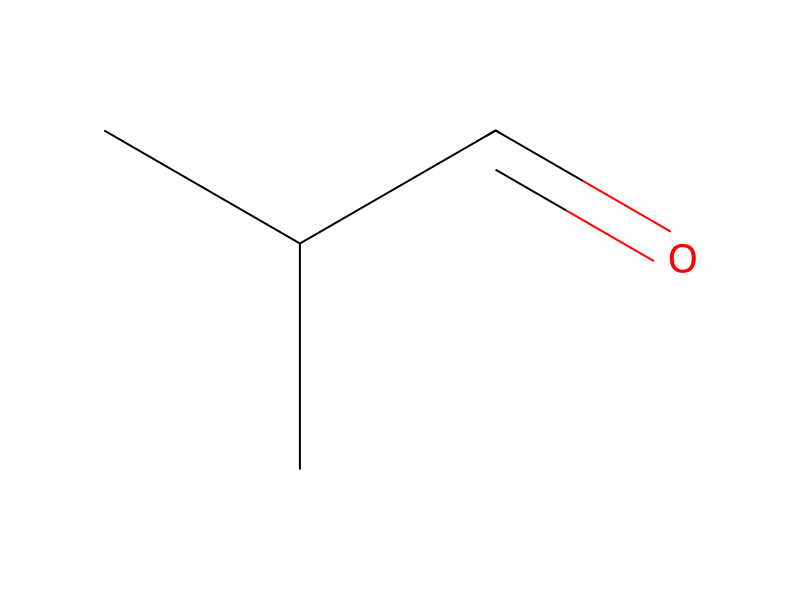
[N:1]12[CH2:8][CH2:7]N(CC1)CC2.[CH:9](=[O:13])[CH:10]([CH3:12])[CH3:11].[C:14](#N)C=C.Cl>C(C1C=C(C)C=C(C(C)(C)C)C=1O)(C)(C)C.O>[OH:13][CH:9]([CH:10]([CH3:12])[CH3:11])[C:7](=[CH2:14])[C:8]#[N:1]Participants




Conditions
- Temperature
- 25 °C
Procedure
A 250 mL, three-necked, round-bottom flask with overhead stirring is charged with 0.36 g (1.6 mmol) of 2,6-di-tert-butyl-4-methylphenol, 37 g (0.33 mol) of 1,4-diazabicyclo[2,2,2]octane, 60 mL (0.66 mol) of isobutyraldehyde, 52 mL (0.79 mol) of acrylonitrile, and 7.2 mL (0.4 mol) of water. The reaction mixture is stirred at 50° C. for 24 hours, cooled to 25° C., and quenched into a solution of 33 mL (0.38 mol) of hydrochloric acid and 100 mL of water. The product is extracted with 120 mL of methylene chloride. The aqueous acid layer is extracted again with 25 mL of methylene chloride. The combined methylene chloride layers are concentrated by rotary evaporation to provide 79.9 g (96.7%) of 3-hydroxy-4-methyl-2-methylenepentanenitrile as a yellow oil (which may solidify to a white solid on standing), 96.7% (area under the curve) by HPLC assay, which may be used in the next step without further purification. Carbonic acid 2-cyano-1-isopropyl-allyl ester ethyl ester
Workup
- stirringThe reaction mixture is stirred at 50° C. for 24 hours
- extractionThe product is extracted with 120 mL of methylene chloride
- extractionThe aqueous acid layer is extracted again with 25 mL of methylene chloride
- concentrationThe combined methylene chloride layers are concentrated by rotary evaporation
Sources & evidence
- ORD record
- ord-b854180c65674e99b1960f110e2d9bdc
- Source dataset
- uspto-grants-2005_05
- Patent number
- US06891059B2
Reaction notes
Loading…