Hydrochloric Acid → (1-((2,6-Difluorophenyl)methyl)-4-methylbenzimidazol-2-yl)methan-1-ol
Reaction equation

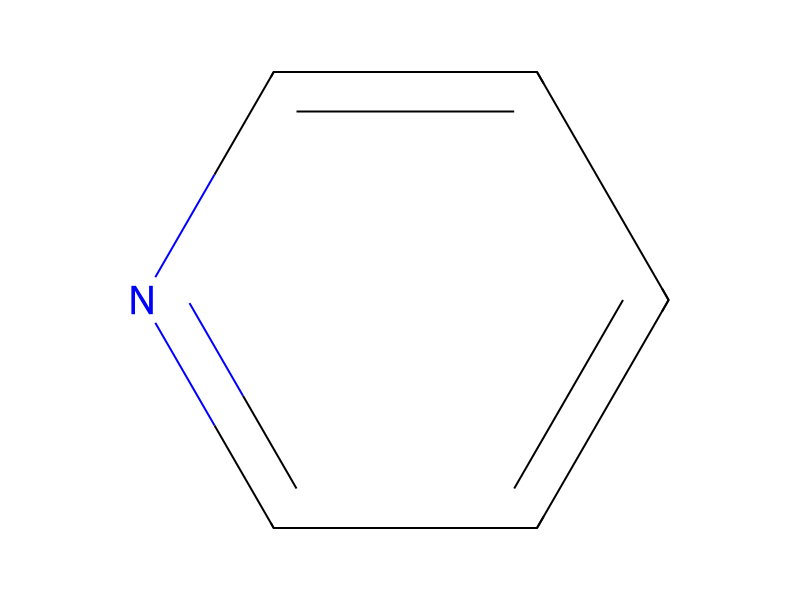
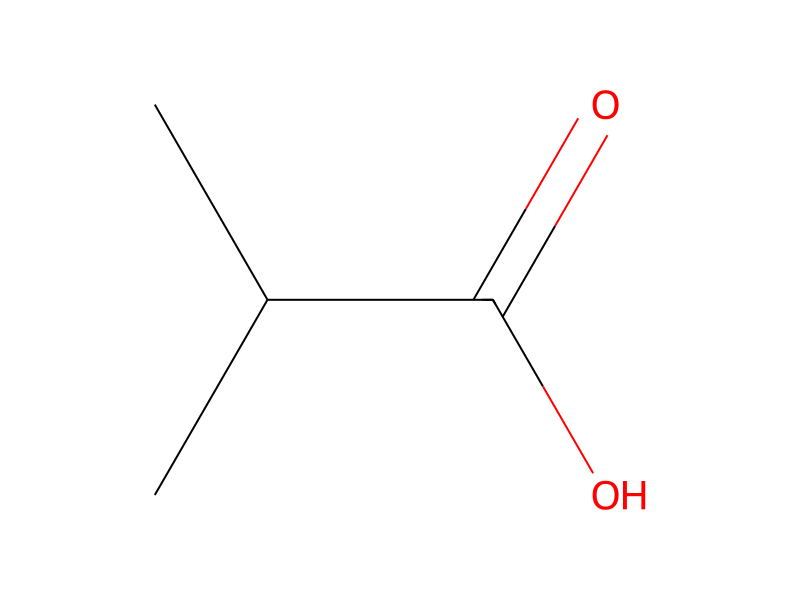
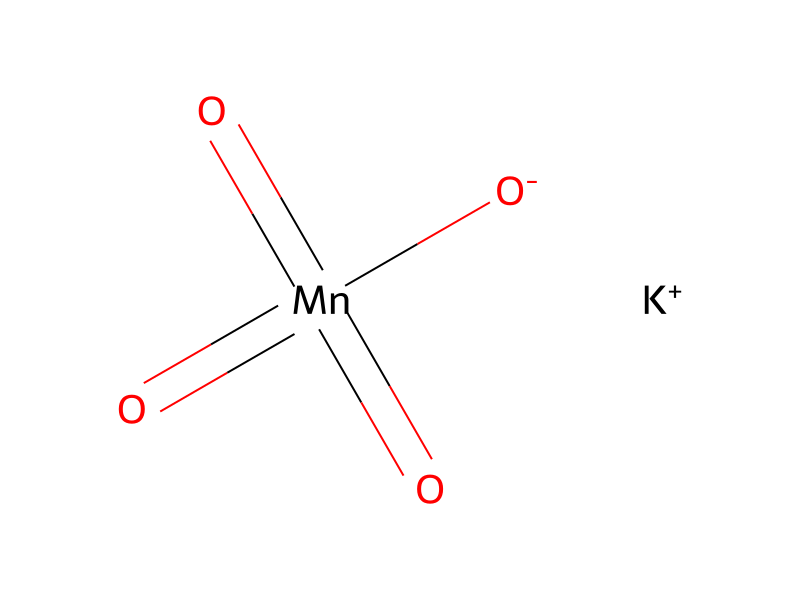
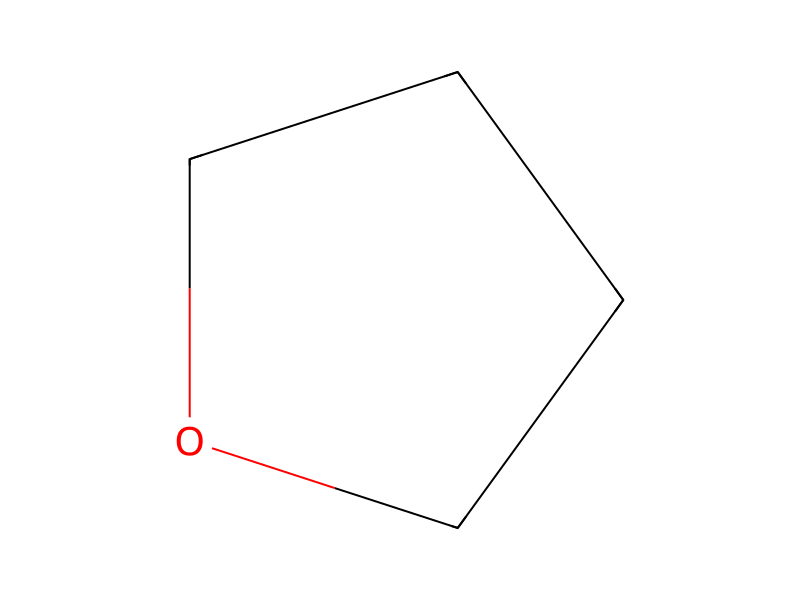
C(O)(=[O:5])C(C)C.Cl.[F:8][C:9]1[CH:14]=[CH:13][CH:12]=[C:11]([F:15])[C:10]=1[C:16]1C=CC=CC=1CBr.[Si](Cl)(C(C)(C)C)(C)C.[N+:32]([CH2:45][CH2:46]CC)([CH2:41][CH2:42][CH2:43][CH3:44])(CCCC)CCCC.[F-].[O-][Mn](=O)(=O)=O.[K+].[N:56]1C=C[CH:59]=[CH:58][CH:57]=1>C1COCC1>[F:15][C:11]1[CH:12]=[CH:13][CH:14]=[C:9]([F:8])[C:10]=1[CH2:16][N:32]1[C:41]2[CH:42]=[CH:43][CH:44]=[C:58]([CH3:59])[C:57]=2[N:56]=[C:45]1[CH2:46][OH:5]Participants
Reactant 7




Product 1

Reagents, catalysts & solvents 1
Procedure
FIG. 4 provides a schematic of substituted N-2(2,6-difluorobenzyl)-benzimidazoles. In this Figure, “a” comprises glycolic or isobutyric acid, 4 N HCl, reflux; “b” comprises 2,6-F2-BzCl (7) or 2,6-F2Bnr (25); “c” comprises t-butyldimethylsilylchloride (tBDMSCl), pyridine; “d” comprises Bu4NF, THF; “e” comprises KMnO4; and “f” comprises CrO3. As shown in FIG. 4, the hydroxymethyl intermediate was protected with t-butyldimethylsilyl (TBDMS), and subsequently N-alkylated with 2,6-difluorophenyl-α-bromotoluene (25). Removal of TBDMS from (31) resulted in the production of 1-(2,6-difluorobenzyl)-2-hydroxymethyl-4-methylbenzimidazole (49). However, oxidation of the hydroxymethyl to the carboxylic acid was found to be problematic. When a strong oxidant (e.g., KMnO4) was used, the isolated product (50) indicated that decarboxylation occurred under acidic reaction conditions. Oxidation under basic conditions with chromium oxide similarly yielded (50), along with the formyl product. The carboxylic acid form was not isolated. A final product prepared from the 2-hydroxymethylbenzimidazole (4) was the bis-2,6-difluorobenzyl derivative (32).
Workup
- customRemoval of TBDMS from (31)
Sources & evidence
- ORD record
- ord-37d0c1890f6247b388734bc8754c3589
- Source dataset
- uspto-grants-2005_05
- Patent number
- US06894068B2
Reaction notes
Loading…