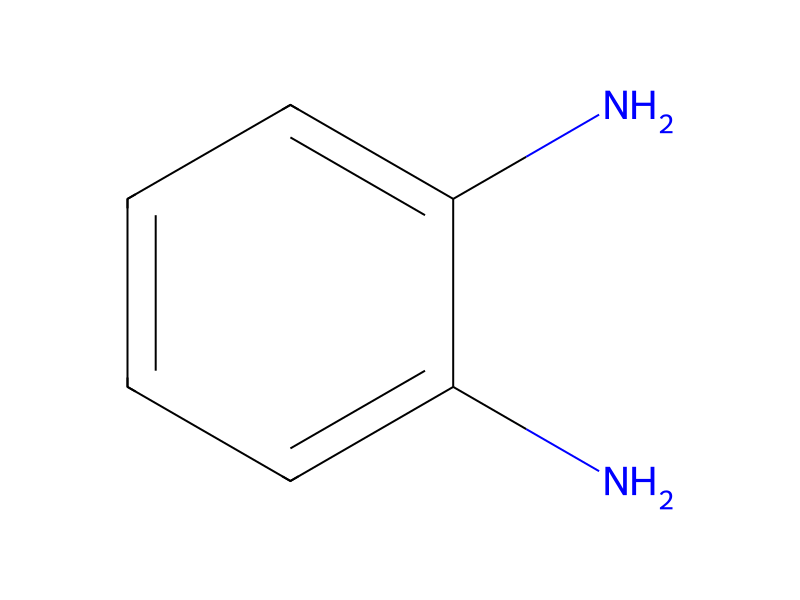
O-Phenylenediamine → 1097816-83-5
Reaction equation

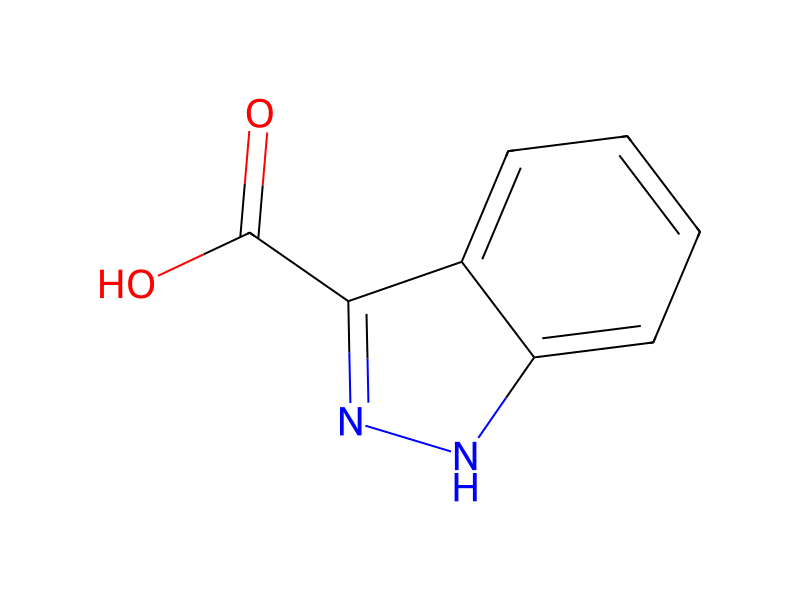
[NH2:1][C:2]1[CH:7]=[CH:6][CH:5]=[CH:4][C:3]=1[NH2:8].[NH:9]1[C:17]2[C:12](=[CH:13][CH:14]=[CH:15][CH:16]=2)[C:11]([C:18](O)=O)=[N:10]1.C(=O)([O-])[O-].[K+].[K+]>C(OCC)(=O)C>[NH:1]1[C:2]2[CH:7]=[CH:6][CH:5]=[CH:4][C:3]=2[N:8]=[C:18]1[C:11]1[C:12]2[C:17](=[CH:16][CH:15]=[CH:14][CH:13]=2)[NH:9][N:10]=1Participants
5
Reactant 3

Product 1

Reagents, catalysts & solvents 1

Conditions
- Temperature
- 155 °C
Procedure
A mixture of 1,2-diaminobenzene (108 mg), indazole-3-carboxylic acid (118 mg) and polyphosphoric acid (1 mL) was heated at 150-160° C. for 24 hours. The mixture was cooled, then diluted with ice water (10 mL) and then treated with ethyl acetate (10 mL). The aqueous layer was basified by addition of solid potassium carbonate. The layers were separated and the aqueous layer was extracted with ethyl acetate (10 mL). The combined organic phases were dried and then evaporated. The residue was subjected to chromatography on silica eluting with a mixture of heptane and ethyl acetate to give 3-(1H-benzoimidazol-2-yl)-1H-indazole (78 mg). LC-MS (METHOD A): RT=1.28 minutes; 235 (M+H)+. (b) 3-(5-Methoxy-1H-benzoimidazol-2-yl)-1H-indazole
Workup
- temperatureThe mixture was cooled
- customThe layers were separated
- extractionthe aqueous layer was extracted with ethyl acetate (10 mL)
- customThe combined organic phases were dried
- customevaporated
- additionThe residue was subjected to chromatography on silica eluting with a mixture of heptane and ethyl acetate
Sources & evidence
- ORD record
- ord-6a225ccafb8d4aaca78107d9fd13bfbc
- Source dataset
- uspto-grants-2005_05
- Patent number
- US06897208B2
Reaction notes
Loading…