Potassium Carbonate → HCID 18476219, compound
Reaction equation

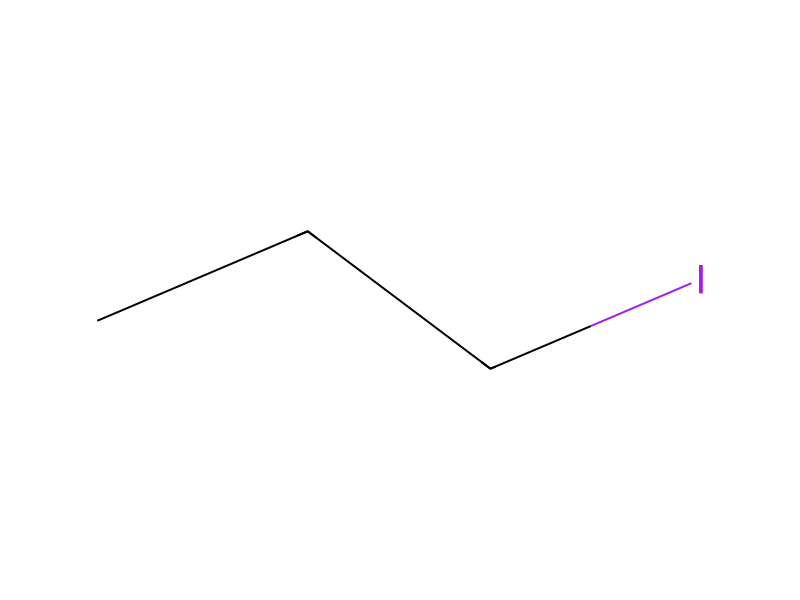
[OH:1][C:2]1[C:3]([C:13]([O:15][CH3:16])=[O:14])=[CH:4][C:5]2[C:10]([C:11]=1[CH3:12])=[CH:9][CH:8]=[CH:7][CH:6]=2.[CH2:17](I)[CH2:18][CH3:19].C(=O)([O-])[O-].[K+].[K+]>CC(=O)CC>[CH3:12][C:11]1[C:10]2[C:5](=[CH:6][CH:7]=[CH:8][CH:9]=2)[CH:4]=[C:3]([C:13]([O:15][CH3:16])=[O:14])[C:2]=1[O:1][CH2:17][CH2:18][CH3:19]Participants
Reactant 3


Product 1

Reagents, catalysts & solvents 1

Conditions
- Temperature
- 60 °C
Procedure
3-Hydroxy-4-methyl-2-naphthoic acid was prepared according to a literature procedure (Izv. Vyssh. Uchebn. Zaved., Khim. Khim. Tekhnol. 2 (1979), 786; Farmaco, Ed. Sci. 33 (1978), 822) and esterified with methanol using standard conditions to give methyl 3-hydroxy-4-methyl-2-naphthoate. A suspension of 300 mg (1.39 mmol) of this ester, 263 mg (1.55 mmol) propyl iodide, and 215 mg (1.55 mmol) of dry potassium carbonate in 60 ml of absolute butanone was stirred at 60° C. for 5 days. After addition of the same amounts of propyl iodide and potassium carbonate stirring was continued at 60° C. for another 2 days. The inorganic salts were filtered off, washed with acetone, and together with a small amount of silica gel the filtrate was evaporated to dryness. The remaining powder was applied to column chromatography on silica gel using hexane followed by a hexane/tert.-butylmethylether gradient up to 9:1.
Workup
- waitwas continued at 60° C. for another 2 days
- filtrationThe inorganic salts were filtered off
- washwashed with acetone
- customtogether with a small amount of silica gel the filtrate was evaporated to dryness
Sources & evidence
- ORD record
- ord-6fd0e853aea240c6b6d7dafae9e08715
- Source dataset
- uspto-grants-2002_06
- Patent number
- US06410562B1
Reaction notes
Loading…