Methyl iodide → HCID 68774665, compound
Reaction equation

FC(F)(F)S(O[C:7]1[CH:12]=[CH:11][CH:10]=[C:9]([C:13]2[CH:18]=[C:17]([C:19]3[C:23]4[CH2:24][C:25]([CH3:30])([CH3:29])[CH2:26][C:27](=[O:28])[C:22]=4[S:21][C:20]=3[N:31]3[CH2:36][CH2:35][O:34][CH2:33][CH2:32]3)[CH:16]=[CH:15][N:14]=2)[CH:8]=1)(=O)=O.C(O[C:44](=O)[NH:45][CH:46]1[CH2:49][NH:48][CH2:47]1)(C)(C)C.CC(C)([O-])C.[K+].[H-].[Na+].CI>O1CCOCC1.CN(C=O)C.CC(O)=O.CC(P(C(C)(C)C)C1C(C2[C-]=CC=CC=2)=CC=CC=1)(C)C.[Pd]>[CH3:29][C:25]1([CH3:30])[CH2:24][C:23]2[C:19]([C:17]3[CH:16]=[CH:15][N:14]=[C:13]([C:9]4[CH:8]=[CH:7][CH:12]=[C:11]([N:48]5[CH2:47][CH:46]([NH:45][CH3:44])[CH2:49]5)[CH:10]=4)[CH:18]=3)=[C:20]([N:31]3[CH2:32][CH2:33][O:34][CH2:35][CH2:36]3)[S:21][C:22]=2[C:27](=[O:28])[CH2:26]1Participants
Reactant 5




Product 1

Reagents, catalysts & solvents 3



Procedure
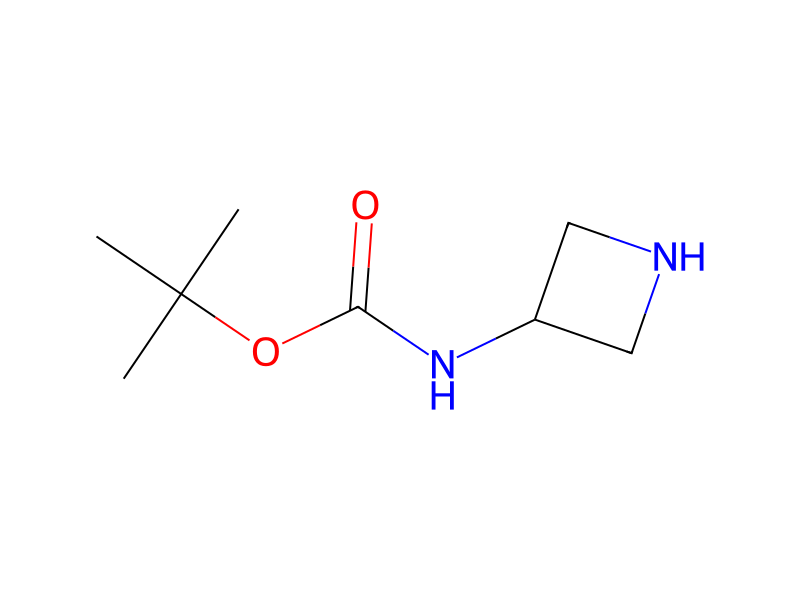
A mixture of Example 360 (200 mg, 0.35 mmol), azetidin-3-ylcarbamic acid tert-butyl ester (125 mg, 0.71 mmol), potassium tert-butoxide (60 mg, 0.49 mmol) and acetato(2′-di-tert-butylphosphino-1,1′-biphenyl-2-yl)palladium(II) (10 mg, 0.02 mmol) in 1,4-dioxane (3.0 mL) was heated in a sealed tube at 100° C., under microwave irradiation, for 30 minutes. The solvent was removed in vacuo and the residue was purified by column chromatography (SiO2, 0-100% EtOAc/heptane). To a solution of the obtained solid in DMF (10 mL) was added sodium hydride (60% dispersion in oil, 10 mg, 0.24 mmol) and the reaction was stirred at room temperature for 30 minutes. Methyl iodide (18 μL, 0.29 mmol) was added and stirring was continued at room temperature for 18 h. Further sodium hydride (60% dispersion in oil, 10 mg, 0.24 mmol) was added and stirring was continued for 2 h at room temperature. The solvent was removed in vacuo and the residue was purified by column chromatography (SiO2, 0-100% EtOAc/heptane). To a solution of the obtained solid in DCM (8 mL) was added TFA (2 mL) and the reaction mixture was stirred at room temperature for 2 h. The solvent was removed in vacuo and the residue was partitioned between DCM (20 mL) and saturated aqueous sodium hydrogencarbonate solution (20 mL). The organic phase was concentrated in vacuo and was purified by column chromatography (SiO2, 0-20% MeOH/DCM) to give the title compound (5 mg, 31%) as a clear glass. δH(CD3OD) 8.68 (1H, d, J 5.1 Hz), 7.91 (1H, s), 7.44 (1H, dd, J 5.3, 1.7 Hz), 7.39-7.29 (2H, m), 7.14-7.08 (1H, m), 6.68-6.60 (1H, m), 4.29-4.17 (2H, m), 4.02-3.91 (1H, m), 3.74-3.56 (6H, m), 3.15-3.01 (4H, m), 2.64 (2H, s), 2.47 (2H, m), 1.05 (6H, s). LCMS (ES+) 503.3 (M+H)+.
Workup
- customThe solvent was removed in vacuo
- customthe residue was purified by column chromatography (SiO2, 0-100% EtOAc/heptane)
- stirringstirring
- waitwas continued at room temperature for 18 h
- stirringstirring
- waitwas continued for 2 h at room temperature
- customThe solvent was removed in vacuo
- customthe residue was purified by column chromatography (SiO2, 0-100% EtOAc/heptane)
- additionTo a solution of the obtained solid in DCM (8 mL) was added TFA (2 mL)
- stirringthe reaction mixture was stirred at room temperature for 2 h
- customThe solvent was removed in vacuo
- customthe residue was partitioned between DCM (20 mL) and saturated aqueous sodium hydrogencarbonate solution (20 mL)
- concentrationThe organic phase was concentrated in vacuo
- customwas purified by column chromatography (SiO2, 0-20% MeOH/DCM)
Sources & evidence
- ORD record
- ord-4fb1801fa7804bceb9cdd4e35588b010
- Source dataset
- uspto-grants-2012_12
- Patent number
- US08324204B2
Reaction notes
Loading…