Sodium Carbonate → HCID 57667972, compound
Reaction equation

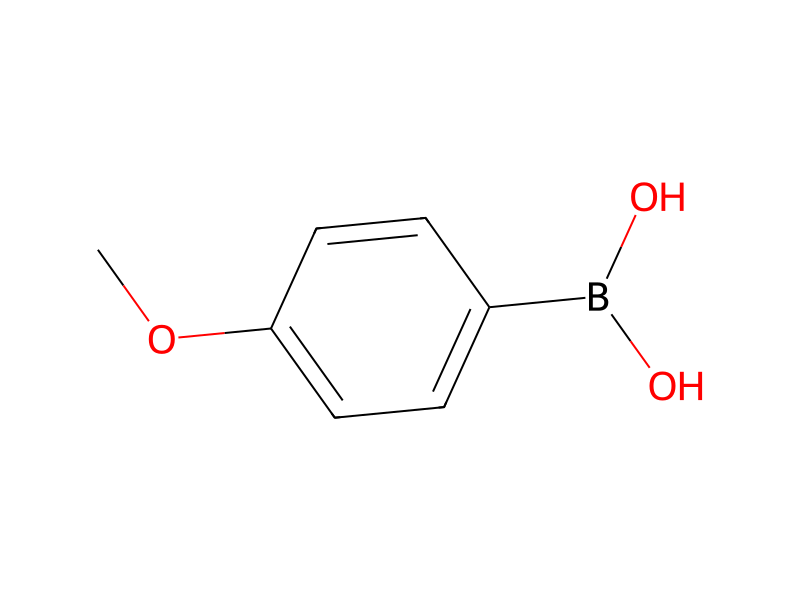
Br[C:2]1[CH:11]=[CH:10][C:5]([C:6]([O:8]C)=[O:7])=[C:4]([NH:12][C:13]2[CH:18]=[CH:17][C:16]([F:19])=[CH:15][CH:14]=2)[CH:3]=1.[CH3:20][O:21][C:22]1[CH:27]=[CH:26][C:25](B(O)O)=[CH:24][CH:23]=1.C(=O)([O-])[O-].[Na+].[Na+]>CN(C)C(=O)C>[F:19][C:16]1[CH:17]=[CH:18][C:13]([NH:12][C:4]2[CH:3]=[C:2]([C:25]3[CH:26]=[CH:27][C:22]([O:21][CH3:20])=[CH:23][CH:24]=3)[CH:11]=[CH:10][C:5]=2[C:6]([OH:8])=[O:7])=[CH:14][CH:15]=1Participants
Reactant 3


Product 1

Reagents, catalysts & solvents 1

Conditions
- Temperature
- 160 °C
Procedure
To N,N-dimethylacetamide 3.0 mL solution of methyl 4-bromo-2-(4-fluoroanilino)benzoate 70 mg were added 4-methoxyphenylboronic acid 66 mg, sodium carbonate 69 mg and polymer-carried bis(acetato)triphenylphosphine palladium(II) 31 mg at room temperature, and it was stirred under application of pressure at 160° C. for 5 minutes. After the reaction mixture was cooled to room temperature, it was stirred under application of pressure at 180° C. for 5 minutes. After the reaction mixture was cooled to room temperature, it was stirred under application of pressure at 200° C. for 5 minutes. After the reaction mixture was cooled to room temperature, it was stirred under application of pressure at 220° C. for 5 minutes. After the reaction mixture was cooled to room temperature, insoluble matter was filtrated, and ethyl acetate and 0.5 mol/L hydrochloric acid were added to it. The organic layer was separated and collected, dried over anhydrous magnesium sulfate after sequential washing with 1.0 mol/L hydrochloric acid and saturated sodium chloride aqueous solution, and the solvent was removed under reduced pressure. 2.0 mol/L sodium hydroxide aqueous solution 1.0 mL and ethanol 4.0 mL were added to the obtained residue, and it was stirred at room temperature for 1 hour and 30 minutes. 0.7 mol/L hydrochloric acid and ethyl acetate were added to the reaction mixture, the organic layer was separated and collected, and the solvent was removed under reduced pressure. The obtained residue was refined by reversed-phase silica gel column chromatography [eluent; 50-100% acetonitrile/0.1% trifluoroacetic acid aqueous solution] to give 2-(4-fluoroanilino)-4-(4-methoxyphenyl)benzoic acid 19 mg of pale yellow solid.
Workup
- temperatureAfter the reaction mixture was cooled to room temperature
- stirringit was stirred under application of pressure at 180° C. for 5 minutes
- temperatureAfter the reaction mixture was cooled to room temperature
- stirringit was stirred under application of pressure at 200° C. for 5 minutes
- temperatureAfter the reaction mixture was cooled to room temperature
- stirringit was stirred under application of pressure at 220° C. for 5 minutes
- temperatureAfter the reaction mixture was cooled to room temperature
- filtrationinsoluble matter was filtrated
- additionethyl acetate and 0.5 mol/L hydrochloric acid were added to it
- customThe organic layer was separated
- customcollected
- dry with materialdried over anhydrous magnesium sulfate
- washafter sequential washing with 1.0 mol/L hydrochloric acid and saturated sodium chloride aqueous solution
- customthe solvent was removed under reduced pressure
- addition2.0 mol/L sodium hydroxide aqueous solution 1.0 mL and ethanol 4.0 mL were added to the obtained residue, and it
- stirringwas stirred at room temperature for 1 hour and 30 minutes
- addition0.7 mol/L hydrochloric acid and ethyl acetate were added to the reaction mixture
- customthe organic layer was separated
- customcollected
- customthe solvent was removed under reduced pressure
Sources & evidence
- ORD record
- ord-66cc7835a6e64859be086b9d4115a0b1
- Source dataset
- uspto-grants-2012_12
- Patent number
- US08327467B2
Reaction notes
Loading…