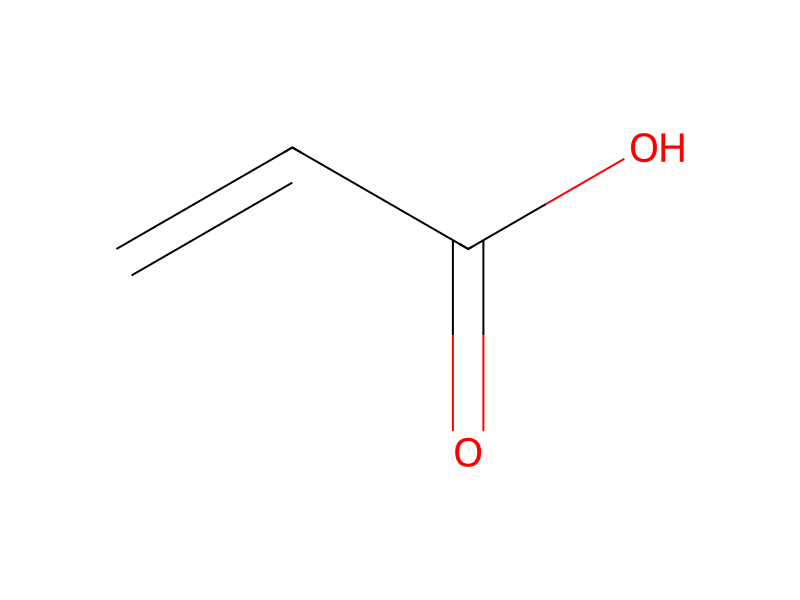
Acrylic Acid → HCID 11416425, compound
Reaction equation

[C:1]([NH:5][C:6]1[N:11]=[C:10]([N:12]2[C:16]3[CH:17]=[C:18]([NH2:21])[CH:19]=[CH:20][C:15]=3[N:14]=[CH:13]2)[CH:9]=[N:8][CH:7]=1)([CH3:4])([CH3:3])[CH3:2].C(N(CC)CC)C.CCN=C=NCCCN(C)C.Cl.[C:41](O)(=[O:44])[CH:42]=[CH2:43]>ClCCl.O>[C:1]([NH:5][C:6]1[N:11]=[C:10]([N:12]2[C:16]3[CH:17]=[C:18]([NH:21][C:41](=[O:44])[CH:42]=[CH2:43])[CH:19]=[CH:20][C:15]=3[N:14]=[CH:13]2)[CH:9]=[N:8][CH:7]=1)([CH3:4])([CH3:2])[CH3:3]Participants
7
Reactant 4



Product 1

Reagents, catalysts & solvents 2


Procedure
To a stirred solution of 1-[6-(tert-butylamino)pyrazin-2-yl]-1H-benzimidazol-6-amine (22 mg, 0.08 mmol) in anhydrous dichloromethane (2 mL) under N2 was added triethylamine (33 μL, 0.24 mmol), EDAC.HCl (22 mg, 0.12 mmol), 4-(1-pyrrolidino)pyridine (cat.) and acrylic acid (8 μL, 0.12 mmol). The resulting mixture then stirred at RT for 3 days and was the diluted with H2O (10 mL), the organic phase separated and the aqueous phase extracted with CH2Cl2 (10 mL). The combined organic layers were dried (Na2SO4) and the solvent removed in vacuo. The residue was purified by column chromatography using dichloromethane-methanol (98:2-93:7) as eluant to separate the pure product (10 mg).
Workup
- customthe organic phase separated
- extractionthe aqueous phase extracted with CH2Cl2 (10 mL)
- dry with materialThe combined organic layers were dried (Na2SO4)
- customthe solvent removed in vacuo
- customThe residue was purified by column chromatography
- customto separate the pure product (10 mg)
Sources & evidence
- ORD record
- ord-2c8eb6f3417a4bae8cc91c52ef65b588
- Source dataset
- uspto-grants-2012_12
- Patent number
- US08329737B2
Reaction notes
Loading…