4-Hydroxybiphenyl → 1-(Biphenyl-4-yloxy)-2,3-epoxypropane
Reaction equation

[C:1]1([C:7]2[CH:12]=[CH:11][C:10]([OH:13])=[CH:9][CH:8]=2)[CH:6]=[CH:5][CH:4]=[CH:3][CH:2]=1.[CH2:14]([CH:16]1[O:18][CH2:17]1)Br.C(=O)([O-])[O-].[K+].[K+]>CC(=O)CC>[CH2:14]([O:13][C:10]1[CH:9]=[CH:8][C:7]([C:1]2[CH:2]=[CH:3][CH:4]=[CH:5][CH:6]=2)=[CH:12][CH:11]=1)[CH:16]1[O:18][CH2:17]1Participants
5
Reactant 3


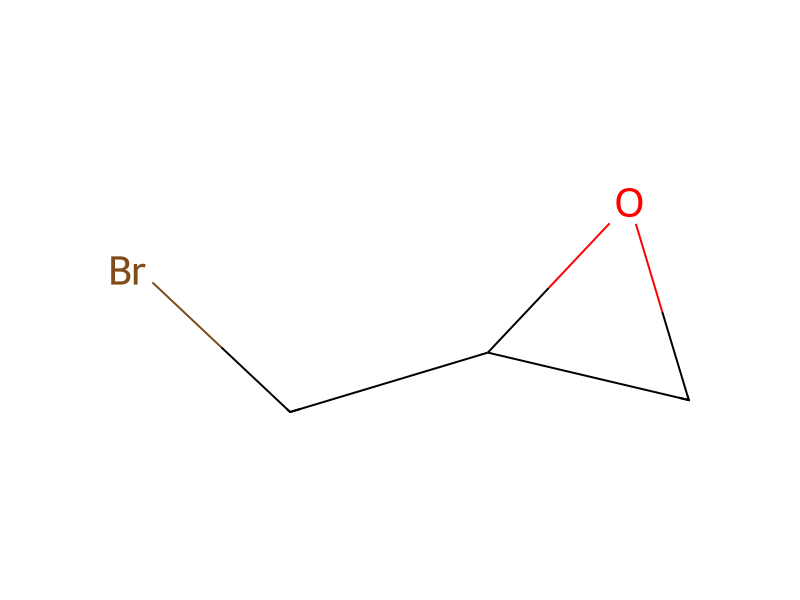
Product 1

Reagents, catalysts & solvents 1

Conditions
- Temperature
- 30 °C
Procedure
4.7 g of p-phenylphenol, 15.1 g of epibromohydrin, 13.6 g of potassium carbonate and 33.3 g of 2-butanone were introduced into a three-necked flask with reflux condenser and stirrer at 30° C. The mixture was heated to 70° C. and stirred for 16 hours. After filtration, the filtrate was freed from low-boiling components in a rotary evaporator. After addition of 2×30 ml of 2-butanone and redistillation, p-phenylphenol glycidyl ether was obtained as a crystalline solid having a melting range of 96-98° C. 1H-NMR (CDCl3, 400 MHz): 2.78 (dd, 1H), 2.90 (t, 1H), 3.36 (m, 1H), 4.02 (dd, 1H), 4.24 (dd, 1H), 7.00 (AA′BB′ system, 2H), 7.30 (t, 1H), 7.40 (t, 1H), 7.55 (m, 4H).
Workup
- temperatureThe mixture was heated to 70° C.
- filtrationAfter filtration
- customthe filtrate was freed from low-boiling components in a rotary evaporator
- additionAfter addition of 2×30 ml of 2-butanone and redistillation
Sources & evidence
- ORD record
- ord-f9605ba3c47e44508dca8c5abaae843e
- Source dataset
- uspto-grants-2012_12
- Patent number
- US08329773B2
Reaction notes
Loading…