Diisopropylamine → 4-Bromo-N,N-diisopropylbenzamide
Reaction equation

[Br:1][C:2]1[CH:10]=[CH:9][C:5]([C:6]([OH:8])=O)=[CH:4][CH:3]=1.C(N(CC)CC)C.[CH:18]([NH:21][CH:22]([CH3:24])[CH3:23])([CH3:20])[CH3:19]>S(Cl)(Cl)=O>[Br:1][C:2]1[CH:3]=[CH:4][C:5]([C:6]([N:21]([CH:22]([CH3:24])[CH3:23])[CH:18]([CH3:20])[CH3:19])=[O:8])=[CH:9][CH:10]=1Participants
5
Reactant 3


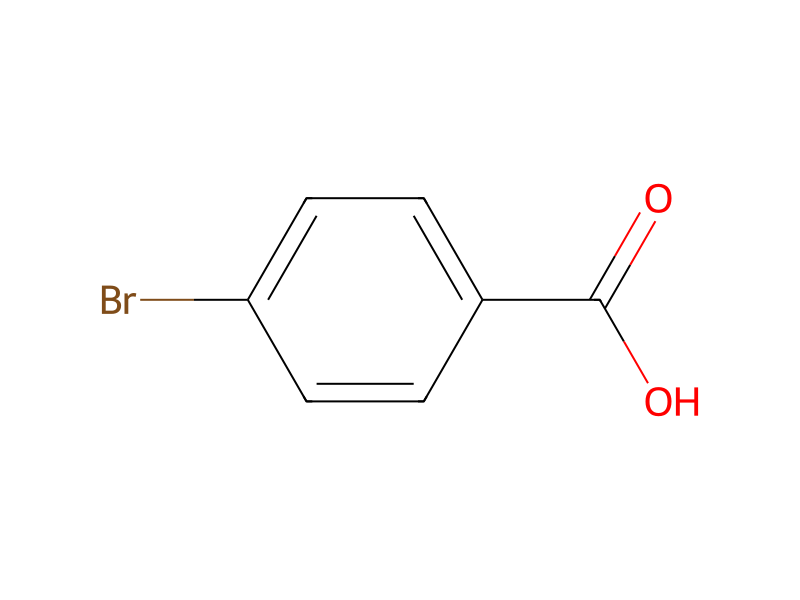
Product 1

Reagents, catalysts & solvents 1

Procedure
A mixture of 4-bromobenzoic acid (200 g, 1 mol) and thionyl chloride (300 mL) was refluxed for 3 hours. The mixture was concentrated in vacuo to remove excessive thionyl chloride, and then azeotroped with toluene (3×). The crude residue was dissolved in CH2Cl2 (2 L) and cooled in ice-water bath. To the resulting solution was added dropwise a mixture of triethylamine (330 mL, 2.38 mol) and diisopropylamine (168 mL, 1.19 mol) over 1 hour. The solution was allowed to stir overnight, and then washed with 1N HCl, followed by brine. The organic layer was dried over MgSO4, filtered, and concentrated to afford 4-bromo-N,N-diisopropylbenzamide. LRMS calc'd for (C13H18BrNO) [M+H]+, 284; found 284.
Workup
- temperaturewas refluxed for 3 hours
- concentrationThe mixture was concentrated in vacuo
- customto remove excessive thionyl chloride
- customazeotroped with toluene (3×)
- dissolutionThe crude residue was dissolved in CH2Cl2 (2 L)
- temperaturecooled in ice-water bath
- additionTo the resulting solution was added dropwise
- washwashed with 1N HCl
- dry with materialThe organic layer was dried over MgSO4
- filtrationfiltered
- concentrationconcentrated
Sources & evidence
- ORD record
- ord-2f6e77f14deb485d824e0b1ee25a082b
- Source dataset
- uspto-grants-2012_12
- Patent number
- US08329722B2
Reaction notes
Loading…