2-(Dimethylamino)ethanol → [2-(3-Bromophenoxy)ethyl]dimethylamine
Reaction equation

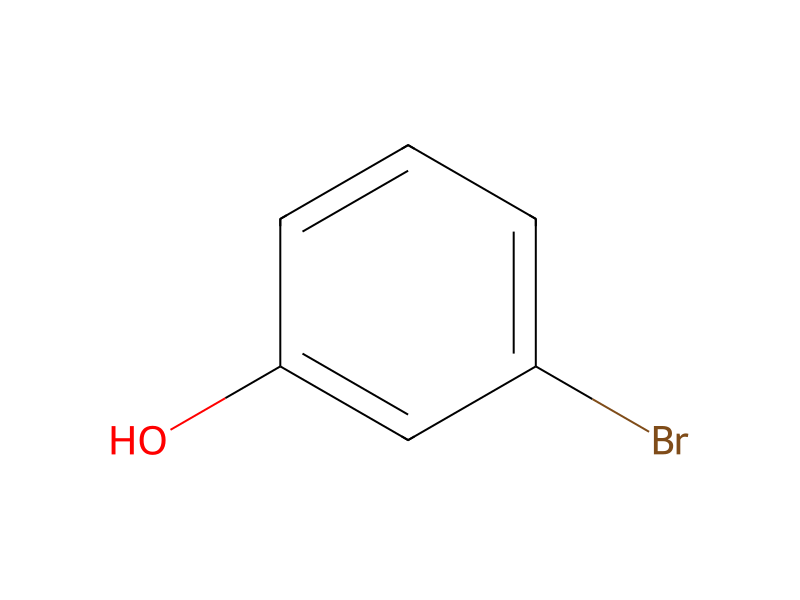
N(C(OC(C)C)=O)=NC(OC(C)C)=O.[Br:15][C:16]1[CH:17]=[C:18]([OH:22])[CH:19]=[CH:20][CH:21]=1.[CH3:23][N:24]([CH3:28])[CH2:25][CH2:26]O.C1(P(C2C=CC=CC=2)C2C=CC=CC=2)C=CC=CC=1>C1COCC1>[Br:15][C:16]1[CH:17]=[C:18]([CH:19]=[CH:20][CH:21]=1)[O:22][CH2:26][CH2:25][N:24]([CH3:28])[CH3:23]Participants
6





Procedure
Diisopropyl diazene-1,2-dicarboxylate (1.1 eq.) was added dropwise to a 0° C. solution of 3-bromophenol (1.155 g, 6.68 mmol, 1.0 eq.), 2-(dimethylamino)ethanol (1.1 eq.) and triphenylphosphine (1.1 eq.) in THF (20 mL). The mixture was allowed to warm to room temperature over 16 hours, and then the volatiles were removed under reduced pressure. The resulting residue was partitioned between EtOAc (20 mL) and 1N HCl (20 mL), and the aqueous layer was collected and washed with EtOAc. The aqueous layer was neutralized with saturated NaHCO3 (50 mL), extracted with EtOAc, and dried (MgSO4). Purification via silica chromatography (eluting with 4% MeOH/DCM) afforded 2-(3-bromophenoxy)-N,N-dimethylethanamine (1.032 g, 63%) as an oil.
Workup
- customthe volatiles were removed under reduced pressure
- customThe resulting residue was partitioned between EtOAc (20 mL) and 1N HCl (20 mL)
- customthe aqueous layer was collected
- washwashed with EtOAc
- extractionextracted with EtOAc
- dry with materialdried (MgSO4)
- customPurification
- washvia silica chromatography (eluting with 4% MeOH/DCM)
Sources & evidence
- ORD record
- ord-0b91ab798f87498e993972c476e3e9f4
- Source dataset
- uspto-grants-2012_12
- Patent number
- US08338452B2
Reaction notes
Loading…