Hydrochloric Acid → (2,6-Diethylphenyl)boronic acid
Reaction equation

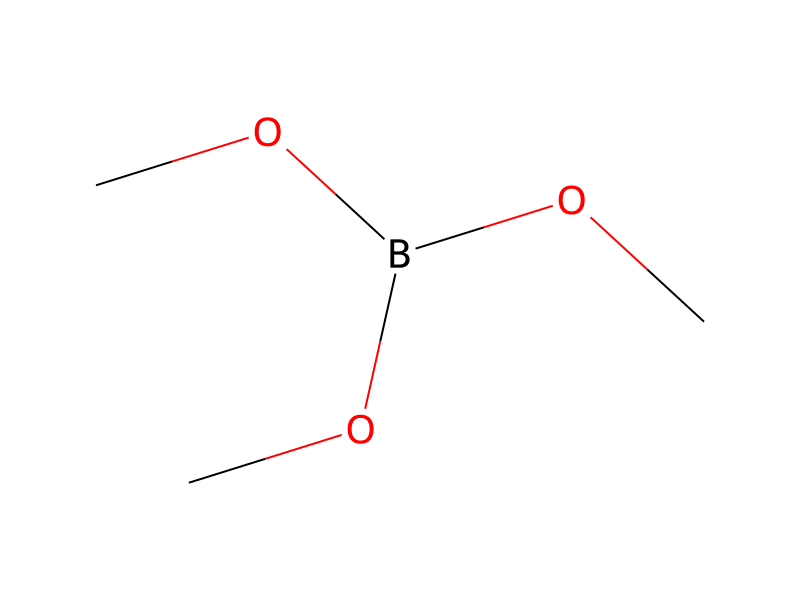
[CH2:1]([C:3]1[CH:8]=[CH:7][CH:6]=[C:5]([CH2:9][CH3:10])[C:4]=1Br)[CH3:2].[Li]CCCC.[B:17](OC)([O:20]C)[O:18]C.Cl>C1COCC1>[CH2:1]([C:3]1[CH:8]=[CH:7][CH:6]=[C:5]([CH2:9][CH3:10])[C:4]=1[B:17]([OH:20])[OH:18])[CH3:2]Participants
Reactant 4



Product 1

Reagents, catalysts & solvents 1

Conditions
- Temperature
- -75 °C
Procedure
2,6-Diethyl bromobenzene (38.2 g, 180.2 mmol) is added dropwise through an additional funnel over a 1 h period to a solution of n-BuLi (2.0 M in cyclohexane, 99.1 mL, 198.2 mmol) in THF (380 mL) at −75° C. After addition, the reaction mixture is stirred at −75° C. for 30 min; trimethyl borate (28.1 g, 270.3 mmol) is added slowly over a 40 minute period. The reaction mixture is warmed to room temperature overnight. 2N HCl (250 mL) is added slowly and the resulting mixture is stirred for 1 h. The organic layer is separated and the aqueous layer is extracted with ether (2×200 mL). The combined organic layers are dried over anhydrous Na2SO4 and the solvents are removed in vacuo. Hexane (400 mL) is added to the residue and a white precipitate is formed. Filtration and drying in vacuo give 2,6-diethylphenyl boronic acid as a white solid. 1H NMR: (CDCl3) 7.22 (t, 1H), 7.04 (s, 2H), 4.65 (s, 2H), 2.64 (q, 4H), 1.22 (t, 6H).
Workup
- additionAfter addition
- temperatureThe reaction mixture is warmed to room temperature overnight
- stirringthe resulting mixture is stirred for 1 h
- customThe organic layer is separated
- extractionthe aqueous layer is extracted with ether (2×200 mL)
- dry with materialThe combined organic layers are dried over anhydrous Na2SO4
- customthe solvents are removed in vacuo
- additionHexane (400 mL) is added to the residue
- customa white precipitate is formed
- filtrationFiltration
- customdrying in vacuo
Sources & evidence
- ORD record
- ord-db3d5a693bc64918adeab23d21bd476c
- Source dataset
- uspto-grants-2012_12
- Patent number
- US08338591B2
Reaction notes
Loading…