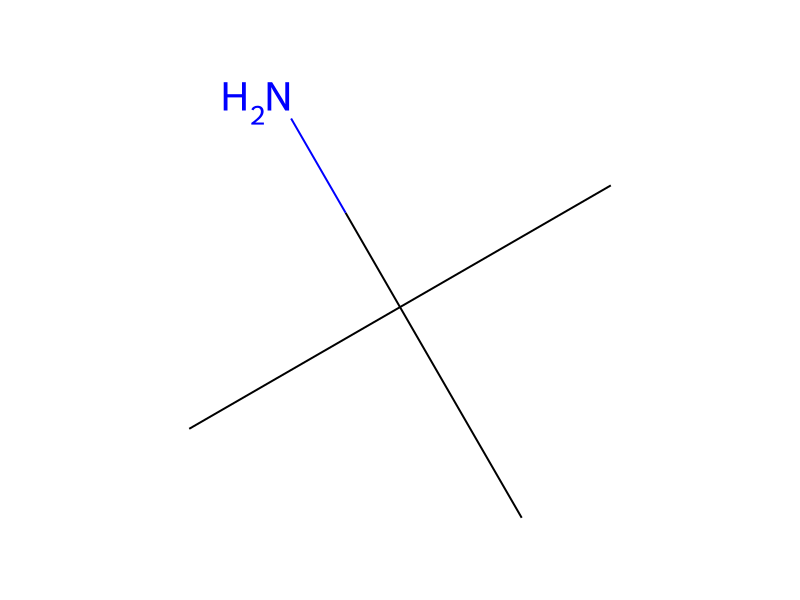
Tert-Butylamine → HCID 54271235, compound
Reaction equation

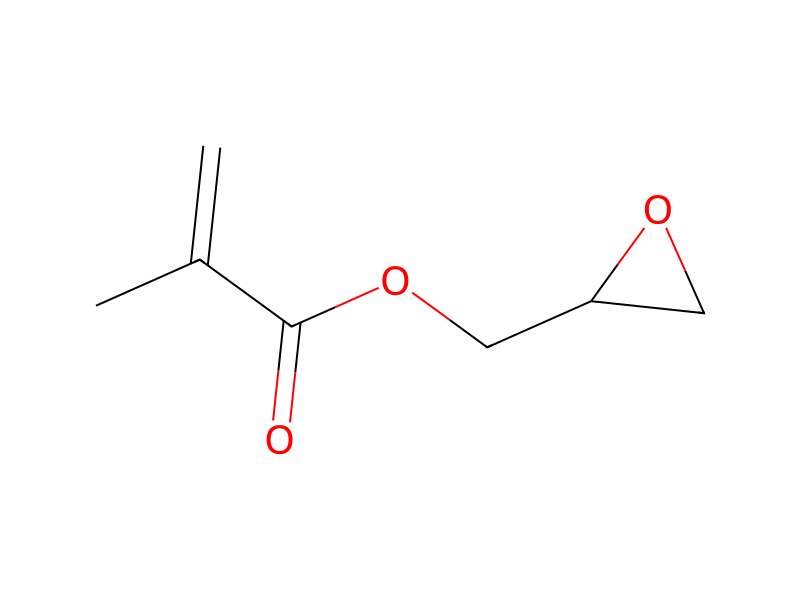
[C:1]([O:6][CH2:7][CH:8]1[O:10][CH2:9]1)(=[O:5])[C:2]([CH3:4])=[CH2:3].[C:11]([NH2:15])([CH3:14])([CH3:13])[CH3:12]>C(O)(C)C>[C:1]([O:6][CH2:7][CH:8]([OH:10])[CH2:9][NH:15][C:11]([CH3:14])([CH3:13])[CH3:12])(=[O:5])[C:2]([CH3:4])=[CH2:3]Participants
Reactant 2
Product 1

Reagents, catalysts & solvents 1

Procedure
There were charged to a glass pressure reactor having a volume of 250 ml, 30 ml of isopropyl alcohol, 20 grams of 90 percent pure glycidyl methacrylate and 9.92 grams of t-butylamine. The reactor was then placed in a water bath at 60° C. for 3.5 hours. Thereafter the solution was cooled in an ice bath, and a white, crystalline precipitate formed, which weighed 17.7 grams after drying. The filtrate was partially concentrated and a second filtration gave an additional 1.3 grams of the same white, crystalline solid product. This yield equalled about 70 percent based on the amount of glycidyl methacrylate charged. The melting point of this solid product was 66°-67° C. The structure of the 2-hydroxy-3-t-butylamino-1-propyl methacrylate produced was further confirmed by nuclear magnetic resonance, infrared analysis and mass spectroscopy.
Workup
- additionThere were charged to a glass pressure reactor
- temperatureThereafter the solution was cooled in an ice bath
- customa white, crystalline precipitate formed
- customafter drying
- concentrationThe filtrate was partially concentrated
- filtrationa second filtration
- customgave an additional 1.3 grams of the same white, crystalline solid product
- additioncharged
- customwas 66°-67° C
Sources & evidence
- ORD record
- ord-339a99a6885e4b72883abc5803ab3faa
- Source dataset
- uspto-grants-1982_11
- Patent number
- US04357440
Reaction notes
Loading…