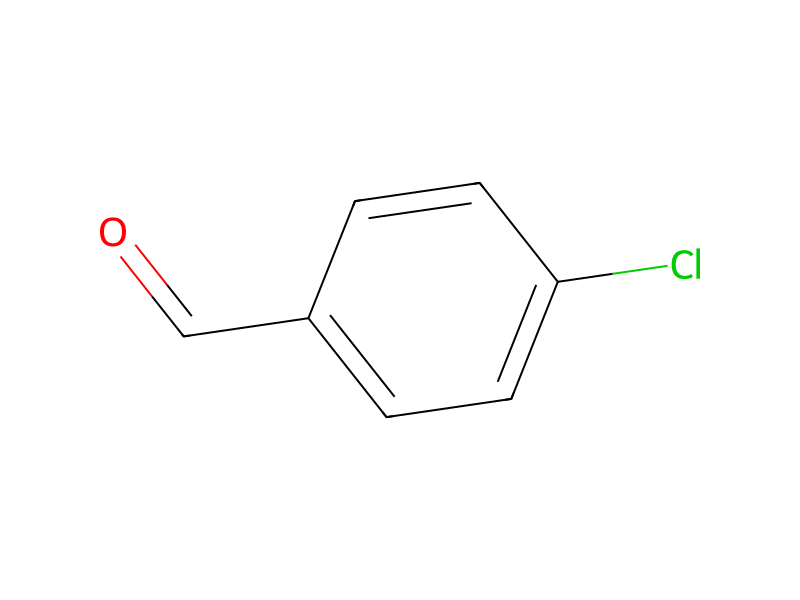
4-Chlorobenzaldehyde → 6-amino-5-(4-chlorobenzylamino)-3-methylpyrimidine-2,4(1H,3H)-dione
Reaction equation

[NH2:1][C:2]1[C:3](=[O:11])[N:4]([CH3:10])[C:5](=[O:9])[NH:6][C:7]=1[NH2:8].[Cl:12][C:13]1[CH:20]=[CH:19][C:16]([CH:17]=O)=[CH:15][CH:14]=1.C([BH3-])#N.[Na+]>O.C(O)(=O)C>[NH2:8][C:7]1[NH:6][C:5](=[O:9])[N:4]([CH3:10])[C:3](=[O:11])[C:2]=1[NH:1][CH2:17][C:16]1[CH:19]=[CH:20][C:13]([Cl:12])=[CH:14][CH:15]=1Participants
6





Procedure
To a solution of 5,6-diamino-3-methylpyrimidine-2,4(1H,3H)-dione (0.8 g, 5.13 mmol) in water (10 mL) and acetic acid (0.5 mL) was added 4-chlorobenzaldehyde (0.72 g, 5.14 mmol), the mixture was stirred at room temperature for 5 h. The mixture was cooled to 0° C., sodium cyanoborohydride (0.3 g, 4.76 mmol) was added and the resulting mixture was stirred at room temperature overnight. The mixture was concentrated and filtered, and the filter cake was washed with methanol, dried in vacuo to give 6-amino-5-(4-chlorobenzylamino)-3-methylpyrimidine-2,4(1H,3H)-dione (0.6 g, 42.9% yield) as yellow solid. LCMS MH+ 281.
Workup
- temperatureThe mixture was cooled to 0° C.
- stirringthe resulting mixture was stirred at room temperature overnight
- concentrationThe mixture was concentrated
- filtrationfiltered
- washthe filter cake was washed with methanol
- customdried in vacuo
Sources & evidence
- ORD record
- ord-326c75503d254cf799e33f299497d0a6
- Source dataset
- uspto-grants-2016_06
- Patent number
- US09359359B2
Reaction notes
Loading…