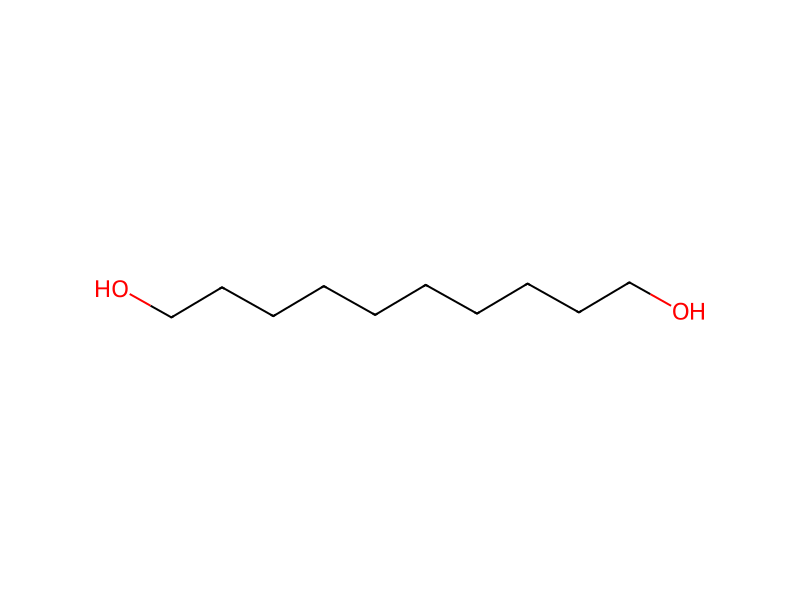
Sebacoyl chloride → 1,10-Decanediol
Reaction equation

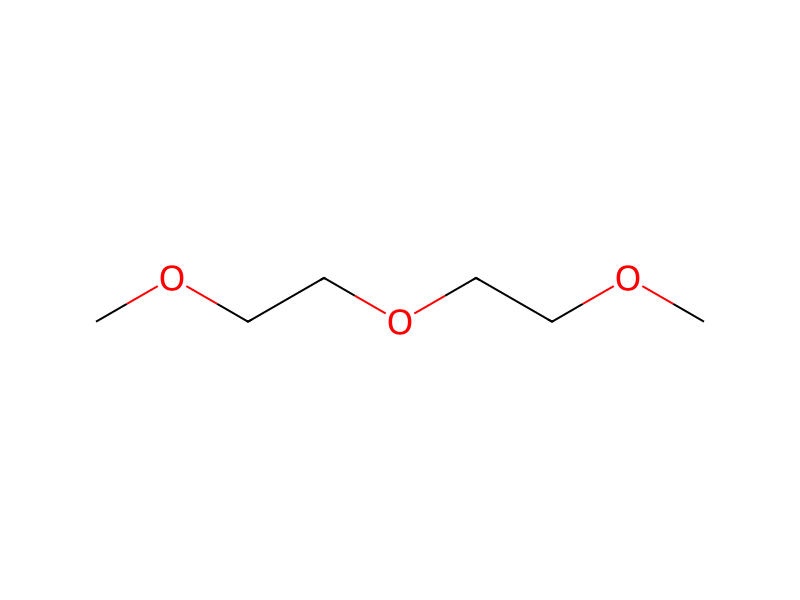
[C:1](Cl)(=[O:13])[CH2:2][CH2:3][CH2:4][CH2:5][CH2:6][CH2:7][CH2:8][CH2:9][C:10](Cl)=[O:11]>COCCOCCOC>[CH2:10]([OH:11])[CH2:9][CH2:8][CH2:7][CH2:6][CH2:5][CH2:4][CH2:3][CH2:2][CH2:1][OH:13]Participants
3
Reactant 1

Product 1
Reagents, catalysts & solvents 1
Procedure
In step 2 a di-aldehyde molecule is formed in solution by reacting sebacic acid with thionyl chloride or sulfur oxychloride (SOCl2) to form Sebacoyl chloride. The resultant Sebacoyl chloride is reacted with LiAl[t-OButyl]3H and diglyme to yield 1,10-decanediol as shown below:
Sources & evidence
- ORD record
- ord-92d41ec80059488bb2ef6f458fcea860
- Source dataset
- uspto-grants-2016_06
- Patent number
- US09364565B2
Reaction notes
Loading…