Sodium Carbonate → 3-(pyridin-4-yl)benzaldehyde
Reaction equation

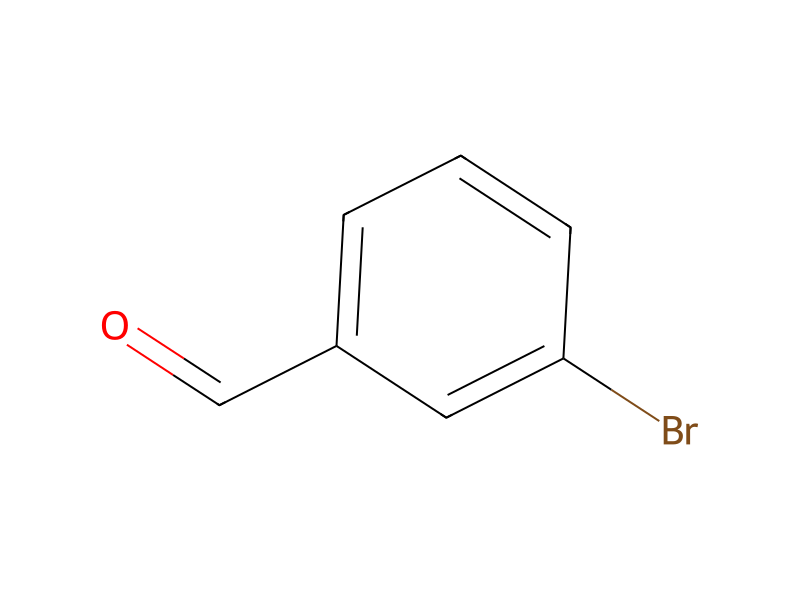
[N:1]1[CH:6]=[CH:5][C:4](B(O)O)=[CH:3][CH:2]=1.C([O-])([O-])=O.[Na+].[Na+].C1C=CC(P(C2C=CC=CC=2)C2C=CC=CC=2)=CC=1.Br[C:36]1[CH:37]=[C:38]([CH:41]=[CH:42][CH:43]=1)[CH:39]=[O:40]>CC(O)C.O.CC([O-])=O.CC([O-])=O.[Pd+2]>[N:1]1[CH:6]=[CH:5][C:4]([C:36]2[CH:37]=[C:38]([CH:41]=[CH:42][CH:43]=2)[CH:39]=[O:40])=[CH:3][CH:2]=1Participants
7
Reactant 4



Product 1

Reagents, catalysts & solvents 2


Conditions
- Temperature
- 80 °C
Procedure
Into a 2 L 3-necked round-bottom flask, purged and maintained with an inert atmosphere of nitrogen, was placed a solution of pyridin-4-ylboronic acid (30 g, 244 mmol, 1 equiv) in 2-propanol/water (800/40 mL), Na2CO3 (77.3 g, 729 mmol, 3 equiv), Pd(OAc)2 (5.46 g, 24.3 mmol, 0.1 equiv), PPh3 (12.75 g, 48.7 mmol, 0.2 equiv) and 3-bromobenzaldehyde (45 g, 243 mmol, 1 equiv). The mixture was stirred for 48 h at 80° C. in an oil bath. Then the solids were filtered out and the filtrate was concentrated under vacuum. The residue was purified by column chromatography on silica gel (eluting with 1:1 ethyl acetate/petroleum ether) to give 30 g of 3-(pyridin-4-yl)benzaldehyde as orange oil.
Workup
- customInto a 2 L 3-necked round-bottom flask, purged
- temperaturemaintained with an inert atmosphere of nitrogen
- filtrationThen the solids were filtered out
- concentrationthe filtrate was concentrated under vacuum
- customThe residue was purified by column chromatography on silica gel (eluting with 1:1 ethyl acetate/petroleum ether)
Sources & evidence
- ORD record
- ord-7f66f8008bf34783b0ce3da21ab6e398
- Source dataset
- uspto-grants-2016_06
- Patent number
- US09371285B2
Reaction notes
Loading…