Benzenesulfonyl chloride → 1-Phenylsulfonylpyrrole
Reaction equation

[BH4-].[Na+].[NH:3]1[CH:7]=[CH:6][CH:5]=[CH:4]1.[C:8]1([S:14](Cl)(=[O:16])=[O:15])[CH:13]=[CH:12][CH:11]=[CH:10][CH:9]=1.[OH-].[Na+]>CC(O)C>[C:8]1([S:14]([N:3]2[CH:7]=[CH:6][CH:5]=[CH:4]2)(=[O:16])=[O:15])[CH:13]=[CH:12][CH:11]=[CH:10][CH:9]=1Participants
Reactant 4
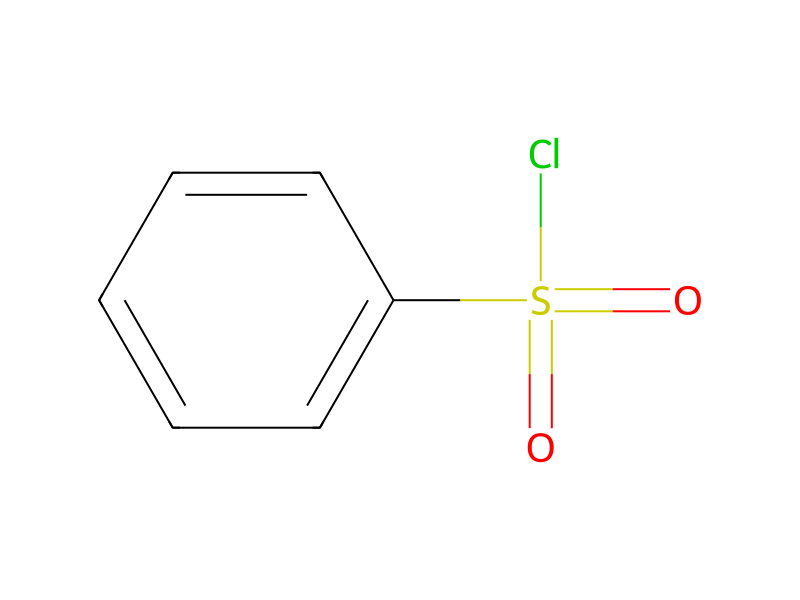
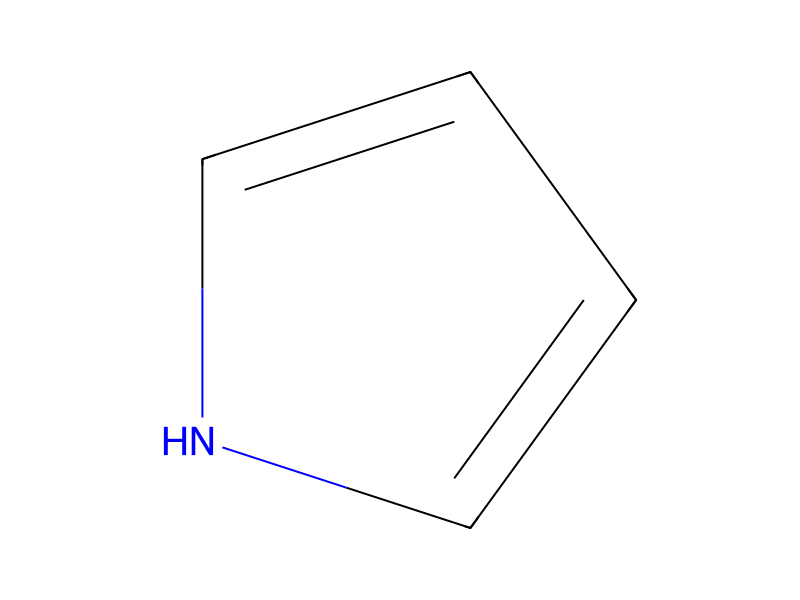


Product 1

Reagents, catalysts & solvents 1

Procedure
Papireddy, K. et al. have recently disclosed the antimalarial activity of prodiginines. In this paper, the authors disclosed the synthesis of 2-alkylated pyrroles and 3-alkylated pyrroles. The intermediates were subsequently used to generate synthetic analogs of prodiginines. In order to generate 2-alkylated pyrroles, pyrrole was acylated using zinc powder to afford 2-acylpyrroles. The 2-acylpyrroles were reduced to the corresponding 2-alkylated pyrroles using an excess of sodium borohydride in 2-propanol under reflux. In order to generate 3-alkylated pyrroles, pyrrole was treated with phenylsulfonyl chloride in the presence of sodium hydroxide to provide N-phenylsulfonylpyrrole. Use of aluminum trichloride permitted the regioselective acylation of the N-phenylsulfonylpyrrole at the 3 position with an acyl chloride to afford N-phenylsulfonyl-3-acylpyrroles. The N-phenylsulfonyl-3-acylpyrroles were hydrolyzed under basic conditions to afford 3-acylpyrroles. In the final step, 3-acylpyrroles were reduced to afford 3-alkylpyrroles using sodium borohydride under reflux. See, Papireddy, K. et al., “Antimalarial Activity of Natural and Synthetic Prodiginines”, J. Med. Chem., 54:5296-5306 (2011).
Workup
- temperatureunder reflux
Sources & evidence
- ORD record
- ord-56dcbf3cd3204b5eacb604a7bc0b6c70
- Source dataset
- uspto-grants-2016_06
- Patent number
- US09371302B2
Reaction notes
Loading…