Triethylamine → HCID 131735934, compound
Reaction equation

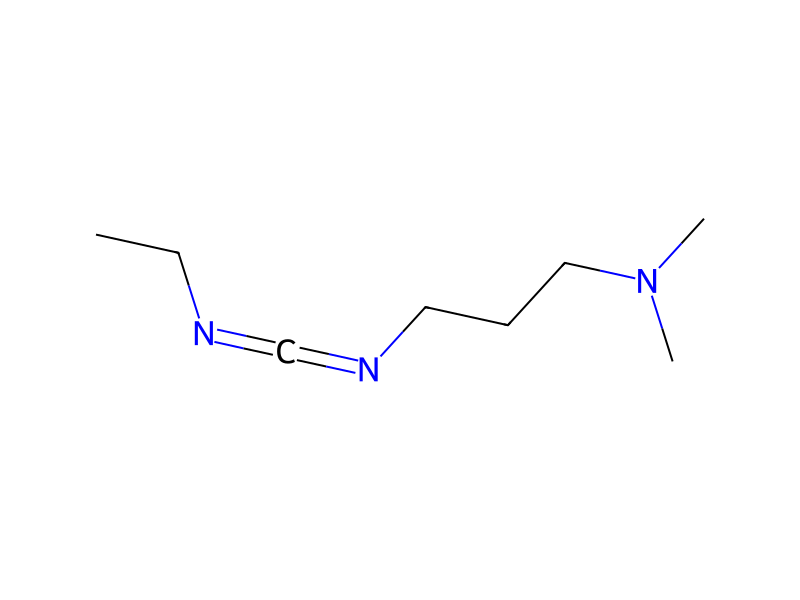
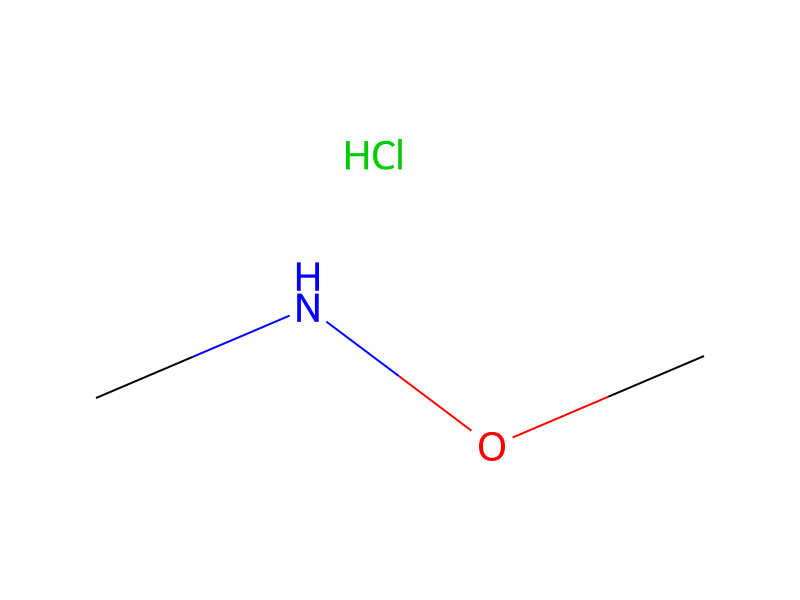
[Br:1][C:2]1[CH:3]=[CH:4][C:5]([CH:8]=[CH:9][C:10]([OH:12])=O)=[N:6][CH:7]=1.Cl.[CH3:14][NH:15][O:16][CH3:17].C1C=CC2N(O)N=NC=2C=1.CCN=C=NCCCN(C)C.C(N(CC)CC)C>ClCCl>[Br:1][C:2]1[CH:3]=[CH:4][C:5]([CH:8]=[CH:9][C:10]([N:15]([O:16][CH3:17])[CH3:14])=[O:12])=[N:6][CH:7]=1Participants
7
Reactant 5



Product 1

Reagents, catalysts & solvents 1

Procedure
3-(5-Bromo-pyridin-2-yl)-acrylic acid (1.3 g, 5.7 mmol) prepared in Step 1, N,O-dimethylhydroxylamine hydrochloride (0.7 g, 6.8 mmol), HOBT (1.5 g, 11.4 mmol), EDAC (2.2 g, 11.4 mmol) and triethylamine (1.6 mL, 11.4 mmol) were added to dichloromethane (42.0 mL). The reaction mixture was stirred at room temperature for 18 hours, quenched with a saturated solution of ammonium chloride, and then extracted with dichloromethane. The extract was washed with brine, dried on anhydrous magnesium sulfate, and then concentrated under reduced pressure to give a yellow liquid residue. The resulting residue was purified by silica gel column chromatography (eluent: ethyl acetate/n-hexane=1/9) to give 1.3 g of the titled compound as a white solid.
Workup
- customquenched with a saturated solution of ammonium chloride
- extractionextracted with dichloromethane
- washThe extract was washed with brine
- dry with materialdried on anhydrous magnesium sulfate
- concentrationconcentrated under reduced pressure
- customto give a yellow liquid residue
- customThe resulting residue was purified by silica gel column chromatography (eluent: ethyl acetate/n-hexane=1/9)
Sources & evidence
- ORD record
- ord-cdde8c51b3a14008a967484742dfc2ff
- Source dataset
- uspto-grants-2016_06
- Patent number
- US09376420B2
Reaction notes
Loading…