Triethylamine → tert-Butyl 4-(bromoacetyl)piperazine-1-carboxylate
Reaction equation

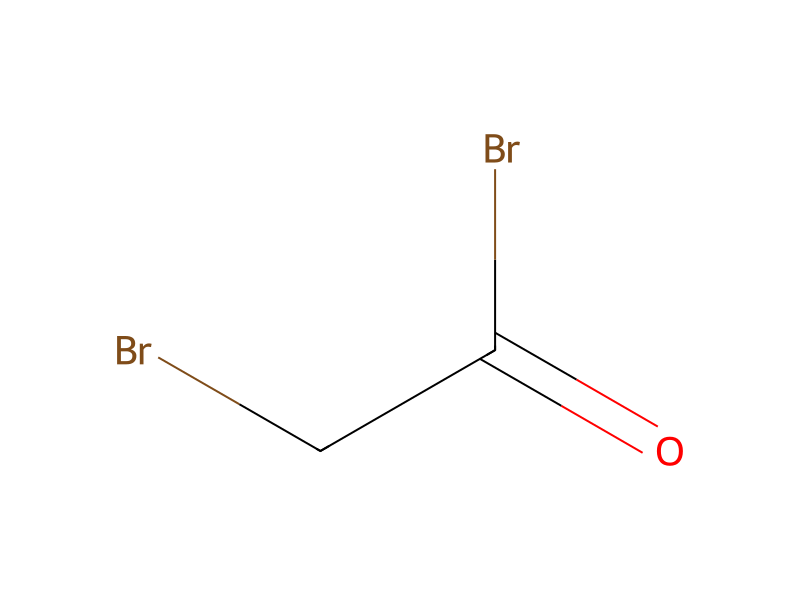
[Br:1][CH2:2][C:3](Br)=[O:4].[C:6]([N:13]1[CH2:18][CH2:17][NH:16][CH2:15][CH2:14]1)([O:8][C:9]([CH3:12])([CH3:11])[CH3:10])=[O:7].C(N(CC)CC)C>C(Cl)Cl>[C:9]([O:8][C:6]([N:13]1[CH2:18][CH2:17][N:16]([C:3](=[O:4])[CH2:2][Br:1])[CH2:15][CH2:14]1)=[O:7])([CH3:12])([CH3:10])[CH3:11]Participants
5
Reactant 3


Product 1

Reagents, catalysts & solvents 1

Procedure
A solution of bromoacetyl bromide (8.5 ml, 97 mmol) in DCM (250 ml) at 0° C. was treated dropwise with a solution of 1-Boc-piperazine (15.9, 85.3 mmol) and triethylamine (18.0 ml, 130 mmol) in DCM (150 ml). After addition was complete, the mixture was stirred at room temperature for 4 h. The solution was washed with ice-cold 1M HCl, sat. aq. NaHCO3, dried and concentrated in vacuo. The residue was purified by flash chromatography on silica gel (eluant; 20% EtOAc:80% cyclohexane to 50% EtOAc:50% cyclohexane) to yield the title compound (15.7 g, 60.0%).
Workup
- additionAfter addition
- washThe solution was washed with ice-cold 1M HCl, sat. aq. NaHCO3
- customdried
- concentrationconcentrated in vacuo
- customThe residue was purified by flash chromatography on silica gel (eluant; 20% EtOAc:80% cyclohexane to 50% EtOAc:50% cyclohexane)
Sources & evidence
- ORD record
- ord-69a992019bfd4d05a99971341bf8a3f7
- Source dataset
- uspto-grants-2012_06
- Patent number
- US08202858B2
Reaction notes
Loading…