Sodium Dithionite → Tert-butyl (3-amino-2,6-dichloropyridin-4-yl)carbamate
Reaction equation

[Cl:1][C:2]1[C:7]([N+:8]([O-])=O)=[C:6]([NH:11][C:12](=[O:18])[O:13][C:14]([CH3:17])([CH3:16])[CH3:15])[CH:5]=[C:4]([Cl:19])[N:3]=1.S(S([O-])=O)([O-])=O.[Na+].[Na+].C([O-])(O)=O.[Na+]>C1COCC1.O>[NH2:8][C:7]1[C:2]([Cl:1])=[N:3][C:4]([Cl:19])=[CH:5][C:6]=1[NH:11][C:12](=[O:18])[O:13][C:14]([CH3:15])([CH3:16])[CH3:17]Participants
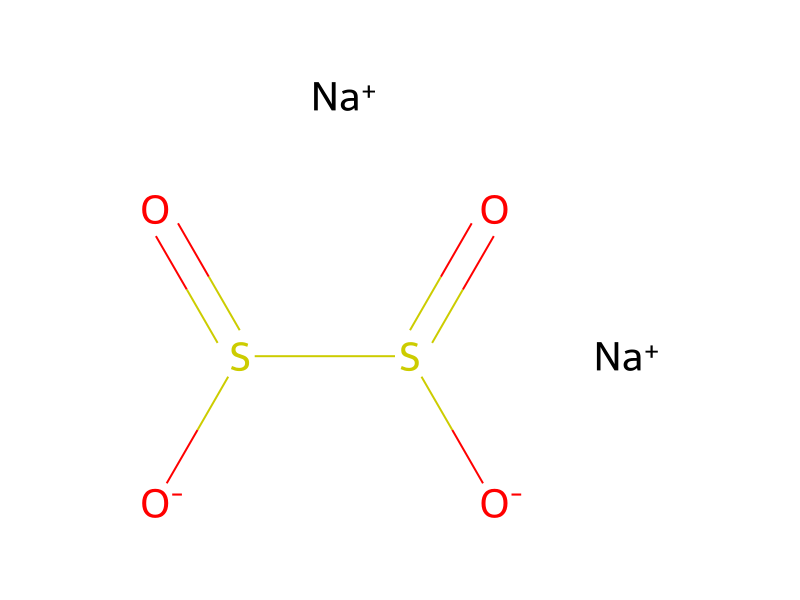





Conditions
- Temperature
- 0 °C
Procedure
Tert-butyl 2,6-dichloro-3-nitropyridin-4-ylcarbamate 2.42 (2.0 g, 6.49 mmol) was dissolved in THF (10 mL) and cooled to 0° C. in ice-bath. To this solution sodium dithionite (3.39 g, 19.47 mmol), and NaHCO3 (1.6 g) dissolved in 10 mL of water, were added and the mixture was stirred at 0° C. After 1 hr, LC/MS indicated full conversion to desired product, solvent was removed under reduced pressure. Solids re-dissolved and extracted with ethyl acetate and water. Organic layer was washed with brine, dried over MgSO4, filtered, and concentrated under reduced pressure. Residue obtained was recrystallized from acetonitrile to obtain tert-butyl 3-amino-2,6-dichloropyridin-4-ylcarbamate 2.43 that was used for next step without further purification.
Workup
- additionwere added
Sources & evidence
- ORD record
- ord-2b0c0463740f49e0a59e6ceea482c8d2
- Source dataset
- uspto-grants-2016_06
- Patent number
- US09376441B2
Reaction notes
Loading…