Potassium Carbonate → 4-((5-Chloropentyl)oxy)benzonitrile
Reaction equation

[C:1]([C:3]1[CH:8]=[CH:7][C:6]([OH:9])=[CH:5][CH:4]=1)#[N:2].C(=O)([O-])[O-].[K+].[K+].Br[CH2:17][CH2:18][CH2:19][CH2:20][CH2:21][Cl:22]>C(#N)C>[C:1]([C:3]1[CH:8]=[CH:7][C:6]([O:9][CH2:17][CH2:18][CH2:19][CH2:20][CH2:21][Cl:22])=[CH:5][CH:4]=1)#[N:2]Participants
5
Reactant 3

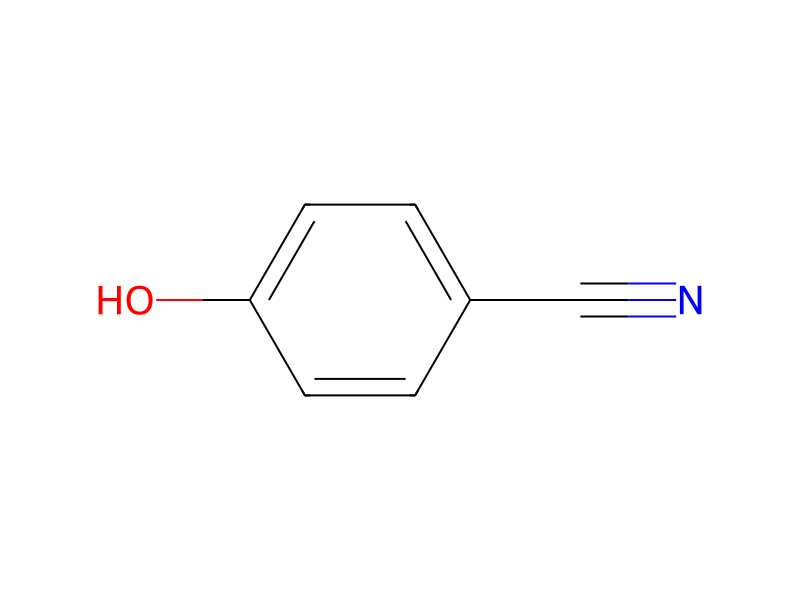

Product 1

Reagents, catalysts & solvents 1

Procedure
A stirred solution of 4-cyanophenol (80.9 g, 0.679 mol) in 1260 mL of acetonitile is treated with potassium carbonate (93.9 g, 0.679 tool) and 1-bromo-5-chloropentane (126 g, 0.679 mmol). The reaction is refluxed overnight and potassium carbonate is filtered off. The filtrate is concentrated in vacuo to generate oil which is partitioned between ether and water. The organic layer is washed with water, dried with magnesium sulfate, and concentrated in vacuo to afford 5-(4-cyanophenoxy)pentyl chloride as a white solid.
Workup
- temperatureThe reaction is refluxed overnight
- filtrationpotassium carbonate is filtered off
- concentrationThe filtrate is concentrated in vacuo
- customis partitioned between ether and water
- washThe organic layer is washed with water
- dry with materialdried with magnesium sulfate
- concentrationconcentrated in vacuo
Sources & evidence
- ORD record
- ord-9d6083dff4c84088802aec3f23a9da66
- Source dataset
- uspto-grants-1995_10
- Patent number
- US05455274
Reaction notes
Loading…