Hydrogen Peroxide → 1-Fluoro-4-hydroxy-1,4-diazoniabicyclo[2.2.2]octane bis(tetrafluoroborate)
Reaction equation

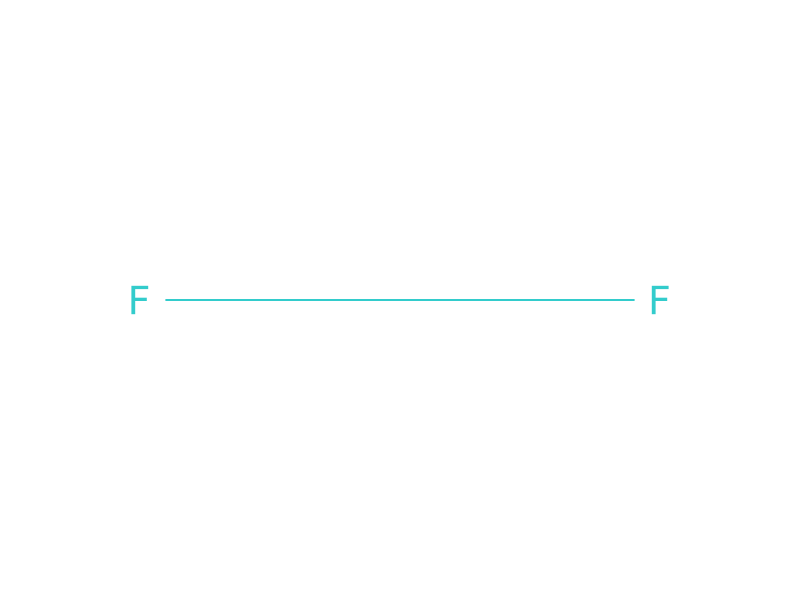
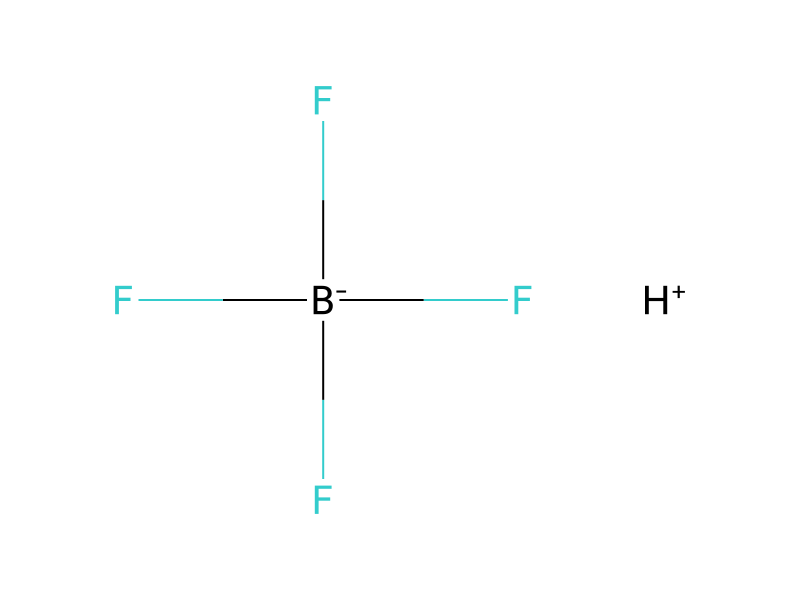
N12CCN(CC1)CC2.OO.[N:11]12[CH2:18][CH2:17][N+:14]([O-:19])([CH2:15][CH2:16]1)[CH2:13][CH2:12]2.[F:20][B-:21]([F:24])([F:23])[F:22].[Na+].[F:26][B-:27]([F:30])([F:29])[F:28].[H+].[F:32]F>C(#N)C>[N:11]12[CH2:18][CH2:17][N+:14]([O-:19])([CH2:15][CH2:16]1)[CH2:13][CH2:12]2.[F:20][B-:21]([F:24])([F:23])[F:22].[F:26][B-:27]([F:30])([F:29])[F:28].[OH:19][N+:14]12[CH2:17][CH2:18][N+:11]([F:32])([CH2:16][CH2:15]1)[CH2:12][CH2:13]2Participants
Reactant 6




Product 2

Reagents, catalysts & solvents 1

Procedure
1,4-Diazabicyclo[2.2.2]octane N-oxide was prepared by the reaction of 1,4-diazabicyclo[2.2.2]octane with hydrogen peroxide as described by Farkas in J. Chem. Eng. Data (1968) 13,278. A solution of 1,4-diazabicyclo[2.2.2]octane N-oxide (1.28 g, 10 mmole), sodium tetrafluoroborate (1.1 g, 10 mmole), and tetrafluoroboric acid (50% solution, 1.83 g, 10 mmole) in acetonitrile (250 mL) was cooled to -35° C. and treated with a mixture of fluorine in nitrogen (10% V/V, 14 mmole). The reaction was evaporated, the remaining solid washed with acetone and dried to afford 1.23 grams of 1-hydroxyl-4-fluoro-1,4-diazoniabicyclo [2.2.2]octane bis(tetrafluoroborate) (38% yield); m.p. 336-8° C.; 1H NMR (D2O): d 5.0 (m, 6H), 4.6 (m, 6H); 13C NMR (D2O): d 61.6 (d, J=15.5 Hz), 62.3 (d, J=6.2 Hz); 19F (D2O): d 41 (1F), -150 (8 F); 15(D2): d -207.5 (d, J=84 Hz), -275.9. Anal. Calcd for C6H13B2F9N2O: C, 22.40; H 4.07; N, 8.70; B, 6.72. Found: C, 22.69; H, 4.25; N, 8.80; B, 6.39.
Workup
- customThe reaction was evaporated
- washthe remaining solid washed with acetone
- customdried
Sources & evidence
- ORD record
- ord-4c3cf7fa40e54663a198765f0b1a74a1
- Source dataset
- uspto-grants-1995_10
- Patent number
- US05459267
Reaction notes
Loading…