1,3-Dibromopropane → 4-(3-Bromopropoxy)-3-methoxybenzonitrile
Reaction equation

[OH:1][C:2]1[CH:9]=[CH:8][C:5]([C:6]#[N:7])=[CH:4][C:3]=1[O:10][CH3:11].C([O-])([O-])=O.[K+].[K+].[Br:18][CH2:19][CH2:20][CH2:21]Br>C(#N)C>[Br:18][CH2:19][CH2:20][CH2:21][O:1][C:2]1[CH:9]=[CH:8][C:5]([C:6]#[N:7])=[CH:4][C:3]=1[O:10][CH3:11]Participants
Reactant 3


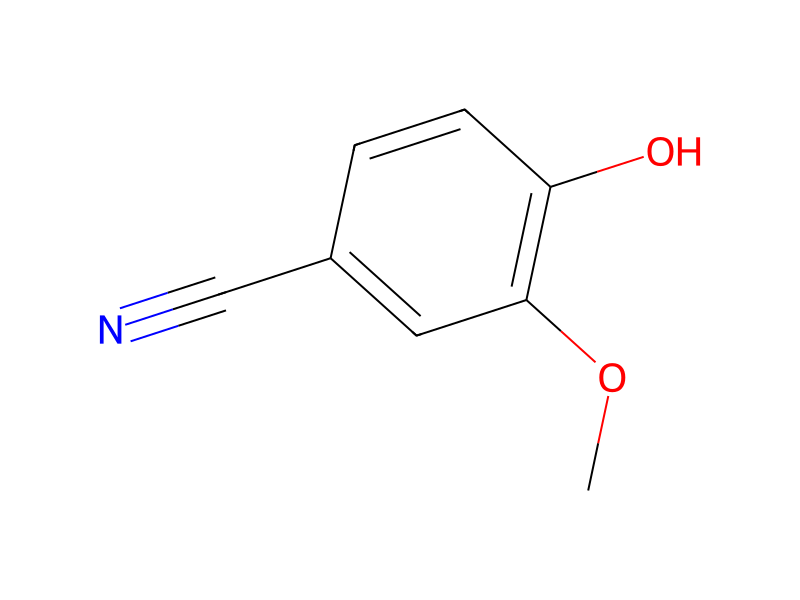
Product 1

Reagents, catalysts & solvents 1

Procedure
A mixture of 4-hydroxy-3-methoxybenzonitrile (7.5 g, 50 mmoles). K2CO3 (12.5 g), and 1,3-dibromopropane (15 g, 75 mmoles) in acetonitrile (100 ml) was heated at reflux for 3 hours and left standing at room temperature overnight. The solvent of the reaction was removed on a rotary evaporator, and the crude solid was extracted into methylene chloride (500 ml). The insolubles were filtered off. The dichloromethane solution was concentrated and the material was purified on a flash chromatography column (SiO2, 105 g; eluted with 2:3 dichloromethane:hexane, and then with dichloromethane). The desired product thus purified weighed 7.74 g (52%). Recrystallization twice from ethanol gave analytically pure 4-(3-bromopropoxy)-3- methoxybenzonitrile, m.p.=99°-101° C.
Workup
- temperatureat reflux for 3 hours
- waitleft
- customThe solvent of the reaction was removed on a rotary evaporator
- extractionthe crude solid was extracted into methylene chloride (500 ml)
- filtrationThe insolubles were filtered off
- concentrationThe dichloromethane solution was concentrated
- customthe material was purified on a flash chromatography column (SiO2, 105 g
- washeluted with 2:3 dichloromethane
- customThe desired product thus purified
- customRecrystallization twice from ethanol
Sources & evidence
- ORD record
- ord-96d1b19b49e94f18b32fb1333da52fdd
- Source dataset
- uspto-grants-2006_09
- Patent number
- USRE039265E1
Reaction notes
Loading…