2-Chloroanthracene → 2-Phenylanthracene
Reaction equation

Cl[C:2]1[CH:15]=[CH:14][C:13]2[C:4](=[CH:5][C:6]3[C:11]([CH:12]=2)=[CH:10][CH:9]=[CH:8][CH:7]=3)[CH:3]=1.[C:16]1(B(O)O)[CH:21]=[CH:20][CH:19]=[CH:18][CH:17]=1.P([O-])([O-])([O-])=O.[K+].[K+].[K+]>C1(P(C2CCCCC2)C2CCCCC2)CCCCC1.C1(C)C=CC=CC=1>[C:16]1([C:2]2[CH:15]=[CH:14][C:13]3[C:4](=[CH:5][C:6]4[C:11]([CH:12]=3)=[CH:10][CH:9]=[CH:8][CH:7]=4)[CH:3]=2)[CH:21]=[CH:20][CH:19]=[CH:18][CH:17]=1Participants
6
Reactant 3



Product 1

Reagents, catalysts & solvents 2

Procedure
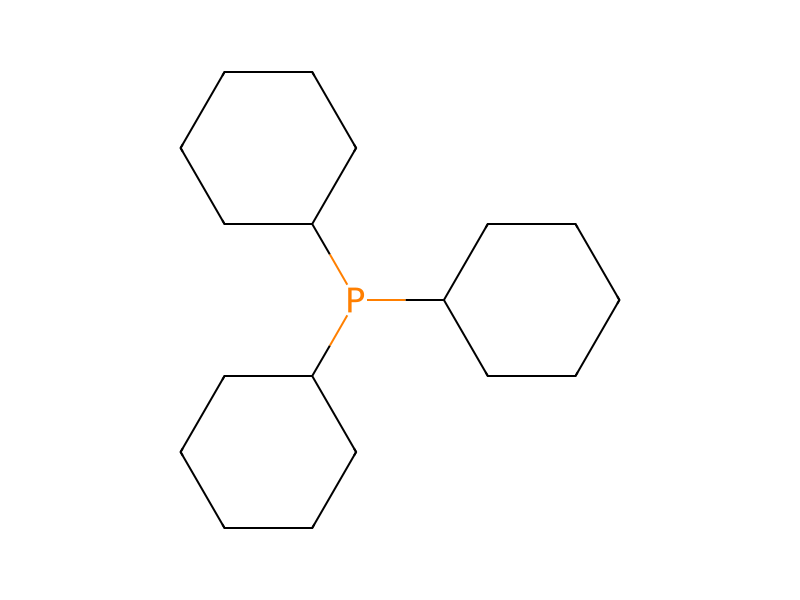
Into a flask, 5.00 g of 2-chloroanthracene, 4.3 g of phenylboronic acid, 538 mg of tris(dibenzylieneacetone)dipalladium(0), 494 mg of tricyclohexyl phosphine, 9.98 g of tripotassium phosphate, and 75 ml of toluene were put, and the solution was stirred at reflux temperature for 2 hours under argon atmosphere. After heating, 1.5 liter of toluene was added to the reaction liquid, the liquid was cooled to room temperature and then filtrated, and thus the filtrates were purified by silica gel column chromatography. The filtrates were concentrated in an evaporator, the concentrates were recrystallized in toluene, and thus 5.0 g of 2-phenylanthracene was obtained.
Workup
- temperatureat reflux temperature for 2 hours under argon atmosphere
- temperatureAfter heating
- filtrationfiltrated
- customthus the filtrates were purified by silica gel column chromatography
- concentrationThe filtrates were concentrated in an evaporator
- customthe concentrates were recrystallized in toluene
Sources & evidence
- ORD record
- ord-7e977a05d39941088a05831005e7e0cd
- Source dataset
- uspto-grants-2012_06
- Patent number
- US08202633B2
Reaction notes
Loading…