Sodium Bromide → (S)-2-Boc-aminobutyraldehyde
Reaction equation

[C:1]([CH:8]([CH2:12][CH3:13])[C@@H:9](N)[OH:10])([O:3][C:4]([CH3:7])([CH3:6])[CH3:5])=[O:2].CC1(C)[N:20]([O])C(C)(C)CCC1.[Br-].[Na+].C(=O)([O-])O.[Na+]>ClCCl.O>[C:4]([O:3][C:1]([C@:8]([NH2:20])([CH2:12][CH3:13])[CH:9]=[O:10])=[O:2])([CH3:7])([CH3:6])[CH3:5]Participants
7


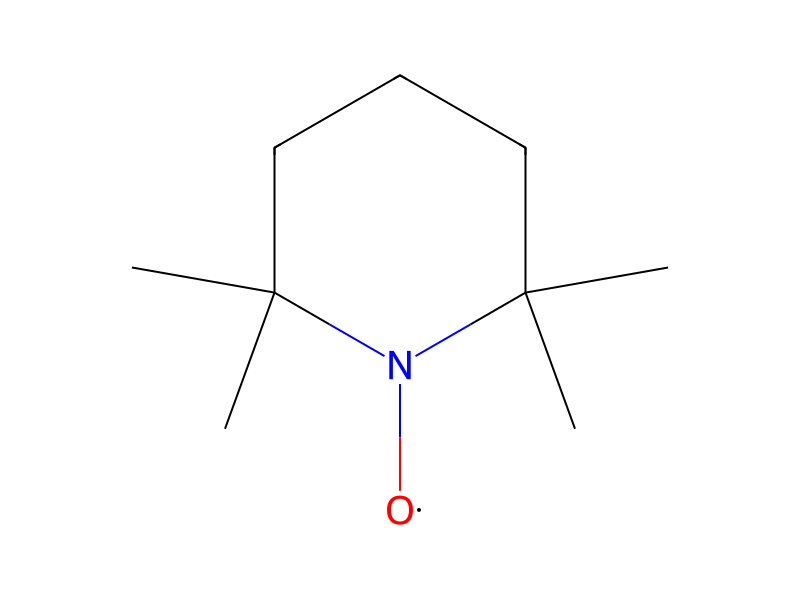




Conditions
- Temperature
- 0 °C
Procedure
To a solution of (S)-2-Boc-aminobutanol (50 g; 264 mmol) in dichloromethane (500 mL) and water (350 mL) were added at 20° C. TEMPO (0.01 eq), sodium bromide (1 eq) and sodium hydrogencarbonate (3 eq). The reaction mixture was stirred at 0° C. and diluted bleach (1.3 eq, 450 mL) was added over 40 min. The reaction mixture was stirred for 30 min. at 0° C. and then quenched with aq. thiosulfate. After decantation and extractions (dichloromethane), the organic phase was washed with brine, dried and concentrated in vacuo to dryness, giving (S)-2-(tert-butoxycarbonyl)-aminobutyraldehyde as a low-melting solid (38.1 g; yield: 77%).
Workup
- additiondiluted bleach (1.3 eq, 450 mL)
- additionwas added over 40 min
- stirringThe reaction mixture was stirred for 30 min. at 0° C.
- customquenched with aq. thiosulfate
- extractionAfter decantation and extractions (dichloromethane)
- washthe organic phase was washed with brine
- customdried
- concentrationconcentrated in vacuo to dryness
Sources & evidence
- ORD record
- ord-e076694a5da140758c8ad236b57e452d
- Source dataset
- uspto-grants-2006_09
- Patent number
- US07101880B2
Reaction notes
Loading…