Hydrazine hydrate (1:1) → Malononitrile
Reaction equation

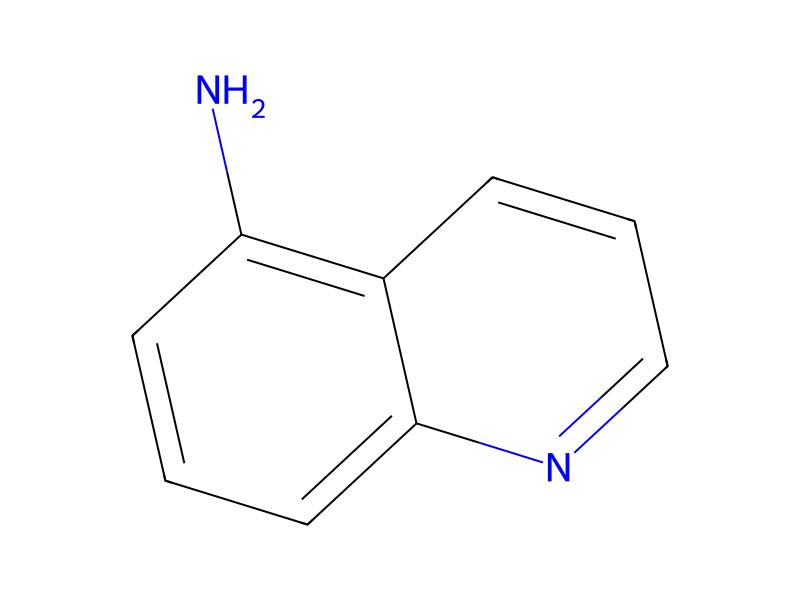
[N:1]1[C:10]2[C:5](=[C:6]([NH:11][N:12]=[C:13]3[C:17]([NH2:18])=[N:16][N:15]=[C:14]3[NH2:19])[CH:7]=[CH:8][CH:9]=2)[CH:4]=[CH:3][CH:2]=1.O.NN>>[NH2:11][C:6]1[CH:7]=[CH:8][CH:9]=[C:10]2[C:5]=1[CH:4]=[CH:3][CH:2]=[N:1]2.[C:6](#[N:11])[CH2:5][C:10]#[N:1].[N:1]1[C:10]2[C:5](=[C:6]([NH:11][N:12]=[C:13]3[C:14]([NH2:19])=[N:15][N:16]=[C:17]3[NH2:18])[CH:7]=[CH:8][CH:9]=2)[CH:4]=[CH:3][CH:2]=1Participants
5



Procedure
In a manner similar to that described in Example 53, 4-(quinolin-5-ylhydrazono)-4H-pyrazole-3,5-diamine was prepared. 5-Aminoquinoline (0.35 g), malononitrile (0.3 g) and hydrazine hydrate (0.3 mL) yielded 0.043 g of the title compound after the purification by preparative TLC (⅓ of the crude product).
Workup
- customwas prepared
Sources & evidence
- ORD record
- ord-c079bced2bb948249f41560a60d00e52
- Source dataset
- uspto-grants-2006_09
- Patent number
- US07105503B2
Reaction notes
Loading…