Water → 4-Nitrophenyl propyl carbonate
Reaction equation

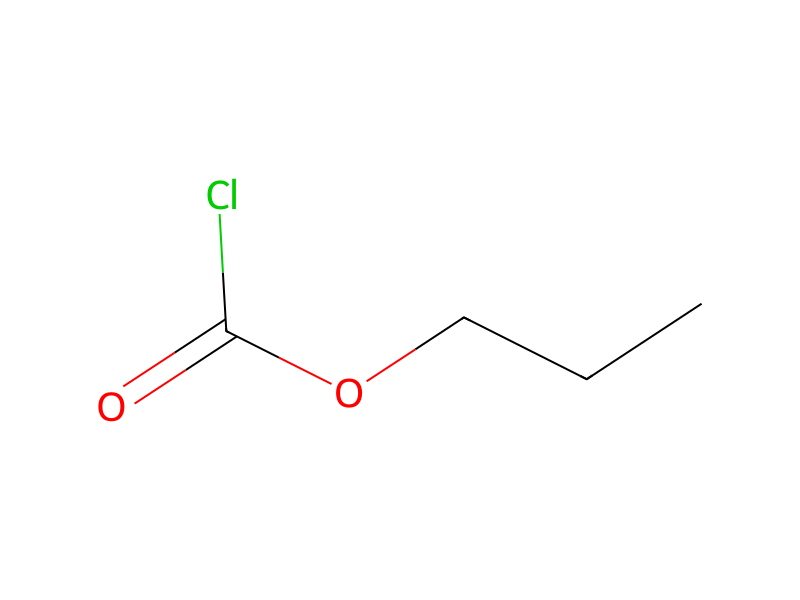
Cl[C:2]([O:4][CH2:5][CH2:6][CH3:7])=[O:3].[N+:8]([C:11]1[CH:16]=[CH:15][C:14]([OH:17])=[CH:13][CH:12]=1)([O-:10])=[O:9].C(N(CC)CC)C.O>C1COCC1>[CH2:5]([O:4][C:2]([O:17][C:14]1[CH:15]=[CH:16][C:11]([N+:8]([O-:10])=[O:9])=[CH:12][CH:13]=1)=[O:3])[CH2:6][CH3:7]Participants
6
Reactant 4



Product 1

Reagents, catalysts & solvents 1

Procedure
A solution of propyl chloroformate (613 mg) in THF (3 ml) was added to a solution of 4-nitrophenol (693 mg) and triethylamine (0.836 ml) in THF (10 ml) at 0° C. After stirred at room temperature for 30 minutes, water was added, and the mixture was extracted with ethyl acetate. The organic layer was washed with a 10% aqueous sodium carbonate solution, an aqueous saturated sodium bicarbonate solution and an aqueous saturated sodium chloride solution, dried, and concentrated to obtain the title compound (1.11 g) as a pale yellow solid.
Workup
- extractionthe mixture was extracted with ethyl acetate
- washThe organic layer was washed with a 10% aqueous sodium carbonate solution
- dry with materialan aqueous saturated sodium bicarbonate solution and an aqueous saturated sodium chloride solution, dried
- concentrationconcentrated
Sources & evidence
- ORD record
- ord-a1d8845f3ac34e83ac3e979414435afd
- Source dataset
- uspto-grants-2006_09
- Patent number
- US07109200B2
Reaction notes
Loading…