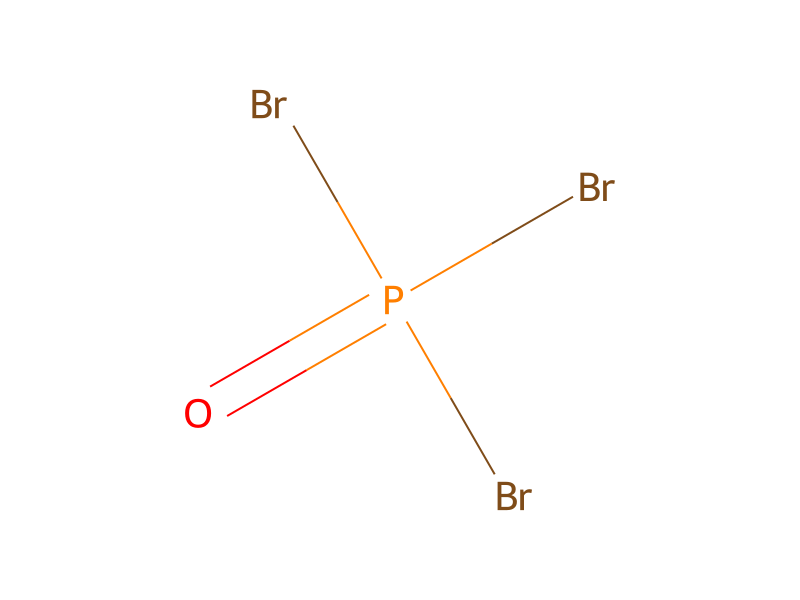
Phosphorus oxybromide → 3-Bromo-6-phenylpyridazine
Reaction equation

[C:1]1([C:7]2[N:12]=[N:11][C:10](O)=[CH:9][CH:8]=2)[CH:6]=[CH:5][CH:4]=[CH:3][CH:2]=1.P(Br)(Br)([Br:16])=O>C1(C)C=CC=CC=1>[Br:16][C:10]1[N:11]=[N:12][C:7]([C:1]2[CH:6]=[CH:5][CH:4]=[CH:3][CH:2]=2)=[CH:8][CH:9]=1Participants
4
Reactant 2

Product 1

Reagents, catalysts & solvents 1

Conditions
- Temperature
- 90 °C
Procedure
Dissolve 6-Phenylpyridazin-3-ol (5.0 g, 29.06 mmol) in toluene (100 mL) and heat to 90° C. Add phosphorous oxybromide (25 g, 87.19 mmol) in several portions and heat the reaction for 30 minutes. Cool the resulting yellow solution to room temperature, pour onto ice water, and extract with ethyl acetate. Further wash the organic layers with water and 1 M NaOH, dry over MgSO4, filter, and evaporate to a yellow solid. Recrystallization from CHCl3 gives 2.17 g of 3-bromo-6-phenylpyridazine.
Workup
- customthe reaction for 30 minutes
- temperatureCool the resulting yellow solution to room temperature
- additionpour onto ice water
- extractionextract with ethyl acetate
- washFurther wash the organic layers with water and 1 M NaOH
- dry with materialdry over MgSO4
- filtrationfilter
- customevaporate to a yellow solid
- customRecrystallization from CHCl3
Sources & evidence
- ORD record
- ord-44d1eed93d32431f82d505d783562aac
- Source dataset
- uspto-grants-2008_05
- Patent number
- US07378447B2
Reaction notes
Loading…