Triethylamine → 4-Chloro-5-cyclopentyloxy-2-fluorophenylisocyanate
Reaction equation

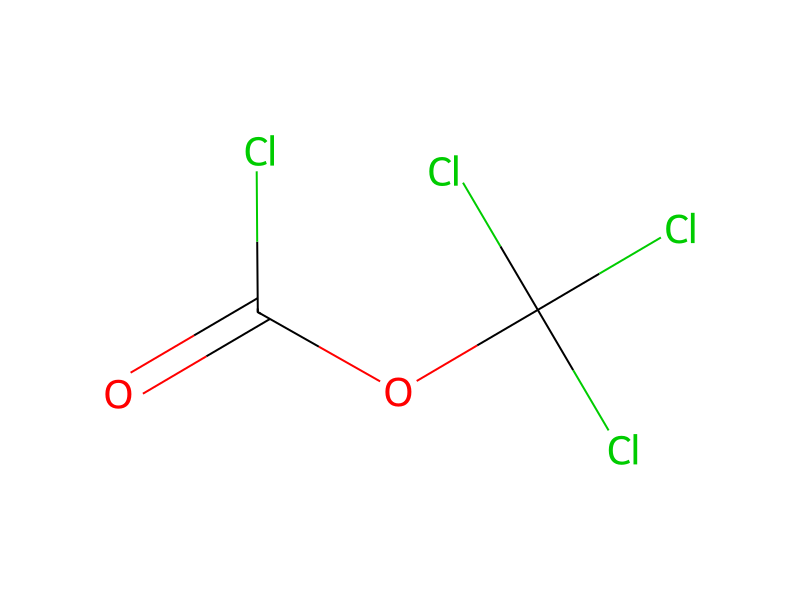
Cl[C:2](OC(Cl)(Cl)Cl)=[O:3].[F:9][C:10]1[CH:16]=[C:15]([Cl:17])[C:14]([O:18][CH:19]2[CH2:23][CH2:22][CH2:21][CH2:20]2)=[CH:13][C:11]=1[NH2:12].C(N(CC)CC)C>C1(C)C=CC=CC=1>[F:9][C:10]1[CH:16]=[C:15]([Cl:17])[C:14]([O:18][CH:19]2[CH2:23][CH2:22][CH2:21][CH2:20]2)=[CH:13][C:11]=1[N:12]=[C:2]=[O:3]Participants
Reactant 3


Product 1

Reagents, catalysts & solvents 1

Conditions
- Temperature
- 0 °C
Procedure
The mixture of trichloromethyl chloroformate (530 ml, 4.4 mol) and toluene (4 liters) were put in a 10-liter three-neck flask as equipped with a stirrer, a dropping funnel, and a reflux condenser, and cooled to 0° C. To the solution was dropwise added a toluene solution (1 liter) containing 2-fluoro-4-chloro-5-cyclopentyloxyaniline (1.0 kg, 2.86 mol) and triethylamine (20 ml) over a period of 8 hours. After addition, the reaction solution was stirred under heat at about 100° C. After reaction, toluene was removed by distillation, and the impurities as precipitated out were removed by filtration. As a result, 2-fluoro-4-chloro-5-cyclopentyloxyphenylisocyanate was obtained almost quantitatively. Spectral data and other data of the product are those as shown in Example 24.
Workup
- customwere put in a 10-liter three-neck flask
- customas equipped with a stirrer, a dropping funnel, and a reflux condenser
- additionAfter addition
- temperatureunder heat at about 100° C
- customwas removed by distillation
- customthe impurities as precipitated out
- customwere removed by filtration
Sources & evidence
- ORD record
- ord-682f3ff987104548881d3eb2226dc050
- Source dataset
- uspto-grants-1994_09
- Patent number
- US05344953
Reaction notes
Loading…