HCID 18469927, compound → HCID 18469929, compound
Reaction equation

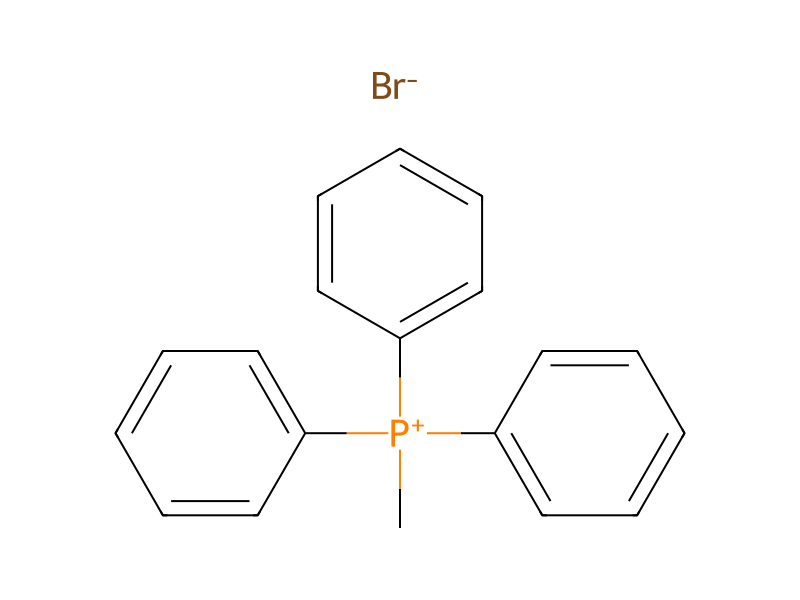
[CH2:1]([Li])CCC.[CH3:6][N:7]1[CH2:13][CH2:12][CH2:11][N:10]([CH:14]2[C:23]3[C:18](=[CH:19][C:20]([CH:24]=O)=[CH:21][CH:22]=3)[CH2:17][CH2:16][CH2:15]2)[CH2:9][CH2:8]1>[Br-].C[P+](C1C=CC=CC=1)(C1C=CC=CC=1)C1C=CC=CC=1.CCCCCC.C1COCC1>[CH3:6][N:7]1[CH2:13][CH2:12][CH2:11][N:10]([CH:14]2[C:23]3[C:18](=[CH:19][C:20]([CH:24]=[CH2:1])=[CH:21][CH:22]=3)[CH2:17][CH2:16][CH2:15]2)[CH2:9][CH2:8]1Participants





Procedure
A dry flask under nitrogen was charged with 0.25 g (0.69 mmol) of methyltriphenyl phosphonium bromide and 2.1 ml of anhydrous THF. To this suspension at ambient temperature was added 0.30 ml (0.69 mmol) of a 2.3 M solution of n-butyllithium in hexane. This was followed by the addition of a solution of 0.18 g (0.67 mmol) of 1-methyl-4-(6-formyl-1,2,3,4-tetrahydro-1-naphthalenyl)homopiperazine in 1.4 ml THF. After two hours, analysis by 1H-NMR of a worked-up aliquot revealed the presence of the desired product (vinyl proton resonances) as well as residual aldehyde (CHO resonance). A second portion of the triphenylphosphonium ylid (0.070 mmol) was generated in 4 ml THF and added to the mixture containing the residual aldehyde. After four hours, analysis by 1H-NMR of a worked-up aliquot indicated only a trace of aldehyde. The reaction mixture was concentrated invacuo to semisolid which was treated with water and extracted several times with ether. The combined ether extract was dried (MgSO4), filtered and concentrated invacuo to a semisolid, 0.34 g. This material was triturated with hexane, filtered and the hexane was removed invacuo. The resulting residue was again titurated with hexane, filtered and concentrated invacuo to give the title compound, 0.18 g, as a yellow oil; 1H-NMR(300 Hz, CDCl3) δ 5.17-5.20 (1H, d), 5.68-5.74 (1H, d), 6.62-6.71 (1H, q).
Sources & evidence
- ORD record
- ord-ed3186937b014d57a07b489bdffcf432
- Source dataset
- uspto-grants-2002_07
- Patent number
- US06417183B1
Reaction notes
Loading…