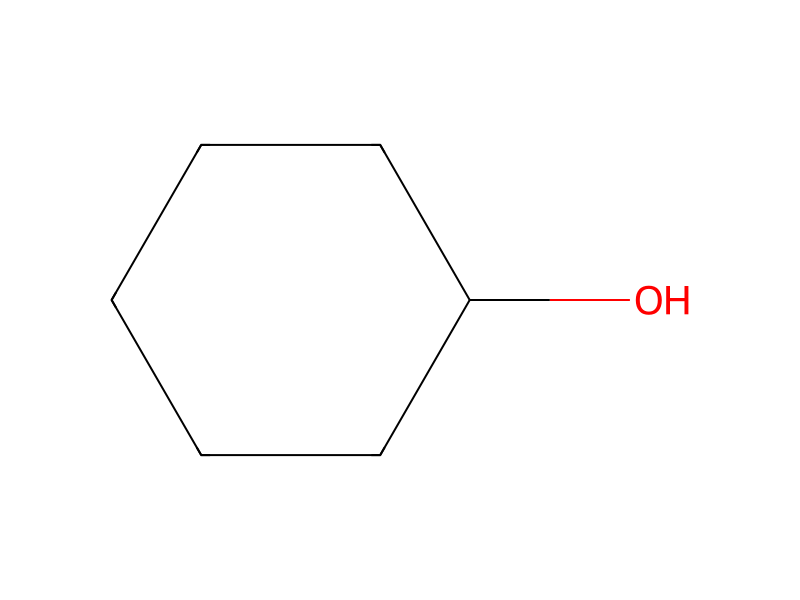
Cyclohexanol → HCID 11962050, compound
Reaction equation

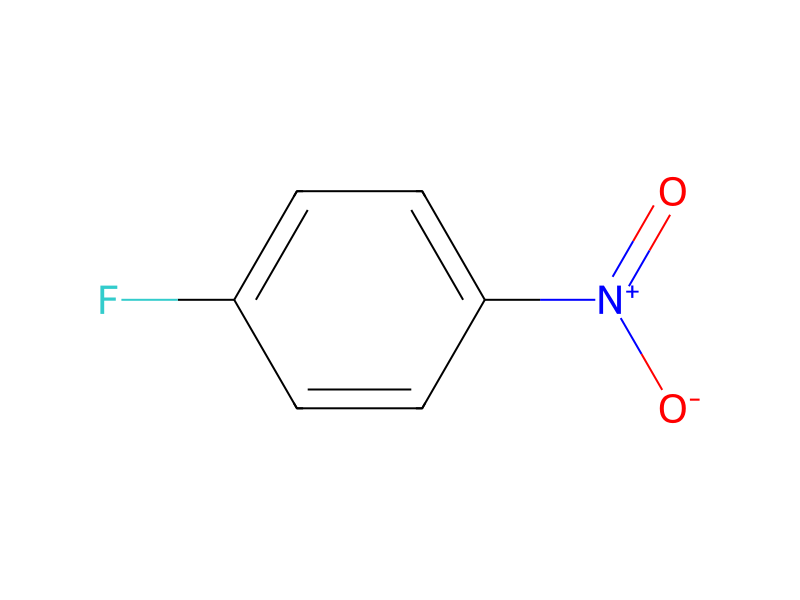
[CH:1]1([OH:7])[CH2:6][CH2:5][CH2:4][CH2:3][CH2:2]1.[H-].[Na+].F[C:11]1[CH:16]=[CH:15][C:14]([N+:17]([O-:19])=[O:18])=[CH:13][CH:12]=1>CN(C)C=O>[CH:1]1([O:7][C:11]2[CH:16]=[CH:15][C:14]([N+:17]([O-:19])=[O:18])=[CH:13][CH:12]=2)[CH2:6][CH2:5][CH2:4][CH2:3][CH2:2]1Participants
5
Reactant 3

Product 1

Reagents, catalysts & solvents 1

Conditions
- Temperature
- 60 °C
Procedure
To 3.9 g of cyclohexanol (1.1 equivalents) put into the presence of 2.12 g of sodium hydride (1.5 equivalents) under stirring for 10 min, is added a solution of 5 g of 4-fluoronitrobenzene in 75 mL of dimethylformamide. The whole is heated to 60° C. for 5 hrs. After returning to room temperature, the medium is hydrolyzed and the reaction crude product is extracted with ethyl acetate several times. The organic phases are dried on magnesium sulfate, filtered and evaporated under reduced pressure. With a silica gel chromatography of the residue (cyclohexane and then cyclohexane/ethyl acetate: 98/2 and 90/10) 6.06 g of the desired product are able to be isolated.
Workup
- customAfter returning to room temperature
- customthe reaction crude product
- extractionis extracted with ethyl acetate several times
- customThe organic phases are dried on magnesium sulfate
- filtrationfiltered
- customevaporated under reduced pressure
- customto be isolated
Sources & evidence
- ORD record
- ord-aab12bc5d989400caad636e918ce3c71
- Source dataset
- uspto-grants-2012_06
- Patent number
- US08207373B2
Reaction notes
Loading…