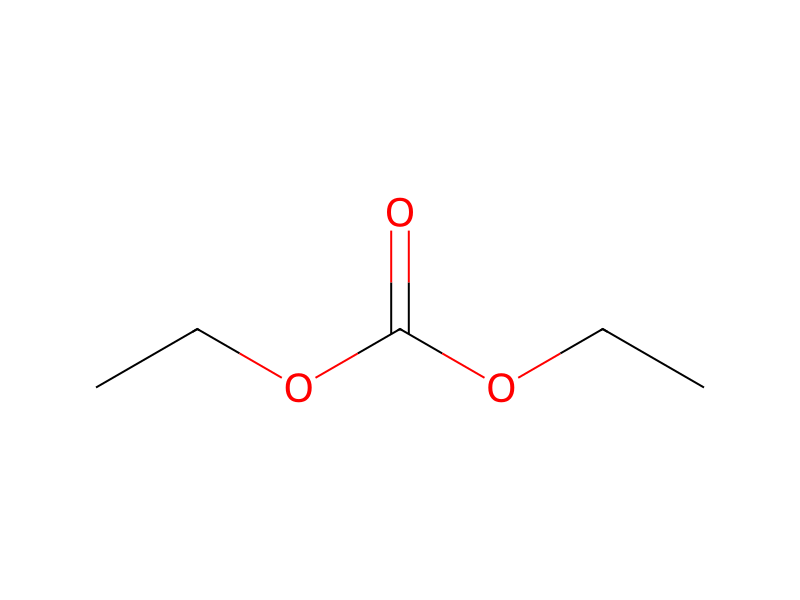
Diethyl Carbonate → HCID 85585358, compound
Reaction equation

[C:1]1([N:7]2[C:16]3[C:11](=[CH:12][CH:13]=[CH:14][CH:15]=3)[C:10](=[O:17])[CH2:9][CH2:8]2)[CH:6]=[CH:5][CH:4]=[CH:3][CH:2]=1.[H-].[Na+].[CH2:20]([O:22][C:23](=O)[O:24]CC)[CH3:21]>C1C=CC=CC=1>[OH:17][C:10]1[C:11]2[C:16](=[CH:15][CH:14]=[CH:13][CH:12]=2)[N:7]([C:1]2[CH:6]=[CH:5][CH:4]=[CH:3][CH:2]=2)[CH2:8][C:9]=1[C:23]([O:22][CH2:20][CH3:21])=[O:24]Participants
Reactant 3


Product 1

Reagents, catalysts & solvents 1

Procedure
A solution of 29 g of 2,3-dihydro-1-phenyl-4(1H)-quinolone in 200 ml of benzene was added, dropwise, to a stirred slurry of 7.2 g of sodium hydride in 200 ml of benzene. The slurry was stirred for one hour at room temperature, and then treated with 23.6 g of diethylcarbonate. The resulting suspension was refluxed for five hours, cooled to room temperature, and quenched with 200 ml of water. The organic phase was separated, dried over anhydrous magnesium sulfate, filtered, and evaporated. Purification of the residue by means of high pressure liquid chromatography (silica gel; dichloromethane as the eluent) afforded 22.4 g (59%) of 1,2-dihydro-4-hydroxy-1-phenyl-3-quinolinecarboxylic acid, ethyl ester. Recrystallization from diethyl ether yielded the analytical sample, m.p. 103°-106° C.
Workup
- temperatureThe resulting suspension was refluxed for five hours
- temperaturecooled to room temperature
- customquenched with 200 ml of water
- customThe organic phase was separated
- dry with materialdried over anhydrous magnesium sulfate
- filtrationfiltered
- customevaporated
- customPurification of the residue by means of high pressure liquid chromatography (silica gel
Sources & evidence
- ORD record
- ord-11a785548adc492fb1a5075c0028fbe0
- Source dataset
- uspto-grants-1988_11
- Patent number
- US04786644
Reaction notes
Loading…