Triethylamine → 4-(Isoquinolin-4-yl)but-3-yn-1-ol
Reaction equation

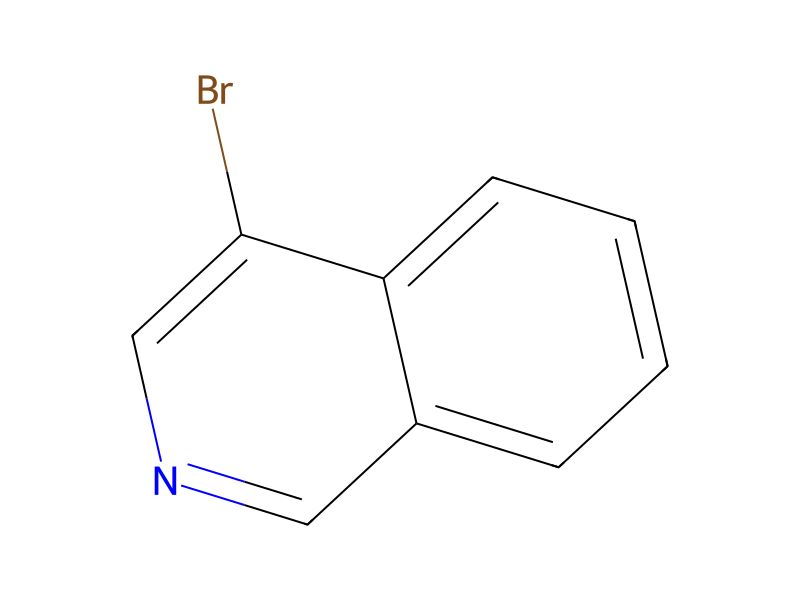
Br[C:2]1[C:11]2[C:6](=[CH:7][CH:8]=[CH:9][CH:10]=2)[CH:5]=[N:4][CH:3]=1.[CH2:12]([OH:16])[CH2:13][C:14]#[CH:15].C(N(CC)CC)C>ClCCl.Cl[Pd](Cl)([P](C1C=CC=CC=1)(C1C=CC=CC=1)C1C=CC=CC=1)[P](C1C=CC=CC=1)(C1C=CC=CC=1)C1C=CC=CC=1>[CH:5]1[C:6]2[C:11](=[CH:10][CH:9]=[CH:8][CH:7]=2)[C:2]([C:15]#[C:14][CH2:13][CH2:12][OH:16])=[CH:3][N:4]=1Participants
6





Procedure
In an inert atmosphere, 0.268 g of bis(triphenylphosphine)palladium dichloride and 0.072 g of cuprous iodide was added with stirring to a deoxygenated solution of 5 g of 4-bromoisoquinoline, 3.02 g of 3-butyn-1-ol and 10 mL of triethylamine in 20 mL of dichloromethane. The reaction was stirred at room temperature for 1 hour and then at reflux for 18 hours. The cooled mixture was filtered and the filtrate was washed with water. The dried (Na2SO4) organic phase was concentrated in vacuo and the residual oil was purified by HPLC (ethyl acetate-toluene; 2:3) to yield 3.4 g of 4-(4-isoquinolinyl)-3-butyn-1-ol as an oil.
Workup
- temperatureat reflux for 18 hours
- filtrationThe cooled mixture was filtered
- washthe filtrate was washed with water
- dry with materialThe dried (Na2SO4) organic phase
- concentrationwas concentrated in vacuo
- customthe residual oil was purified by HPLC (ethyl acetate-toluene; 2:3)
Sources & evidence
- ORD record
- ord-fcc3a29609bc4c44b7a3dfc12d1b6ada
- Source dataset
- uspto-grants-1988_11
- Patent number
- US04786646
Reaction notes
Loading…