Triethylamine → 3-[(5-bromo-2-chloro-pyrimidin-4-yl)-(2-methylpropyl)amino]-N-methyl-propanamide
Reaction equation

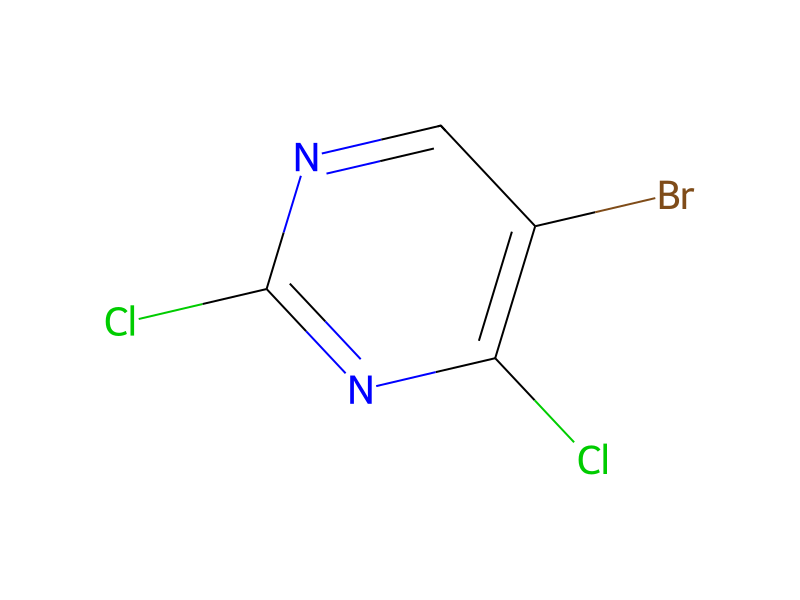
[Br:1][C:2]1[C:3](Cl)=[N:4][C:5]([Cl:8])=[N:6][CH:7]=1.[CH3:10][NH:11][C:12](=[O:20])[CH2:13][CH2:14][NH:15][CH2:16][CH:17]([CH3:19])[CH3:18].C(N(CC)CC)C>C(Cl)Cl>[Br:1][C:2]1[C:3]([N:15]([CH2:16][CH:17]([CH3:19])[CH3:18])[CH2:14][CH2:13][C:12]([NH:11][CH3:10])=[O:20])=[N:4][C:5]([Cl:8])=[N:6][CH:7]=1Participants
5




Procedure
5-Bromo-2,4-dichloropyrimidine (Aldrich; 2.82 g, 12.37 mmol), N-methyl-3-(2-methylpropylamino)propanamide (Intermediate 86; 1.78 g; 11.25 mmol), Triethylamine (1.65 mL, 11.81 mmol) and DCM (40 mL) were combined and stirred over the weekend at room temperature. The reaction mixture was washed saturated aqueous sodium bicarbonate solution and gravity filtered through a PTFE cup and solvent evaporated. The residue was dissolved in DCM and passed through a silica column eluting with a gradient of 30-50% Ethyl Acetate/iso-hexane over 10 column volumes then 50% Ethyl Acetate/iso-hexane. Fractions containing product combined and evaporated to give the title compound as a white solid. (3.26 g, 83%)
Workup
- washThe reaction mixture was washed saturated aqueous sodium bicarbonate solution and gravity
- filtrationfiltered through a PTFE cup and solvent
- customevaporated
- dissolutionThe residue was dissolved in DCM
- washeluting with a gradient of 30-50% Ethyl Acetate/iso-hexane over 10 column volumes
- additionFractions containing product
- customevaporated
Sources & evidence
- ORD record
- ord-361d3adb2ea04f408e49169ee78efdd7
- Source dataset
- uspto-grants-2010_05
- Patent number
- US07709471B2
Reaction notes
Loading…