Water → 3,4-Bis(2-morpholinoethoxy)bromobenzene
Reaction equation

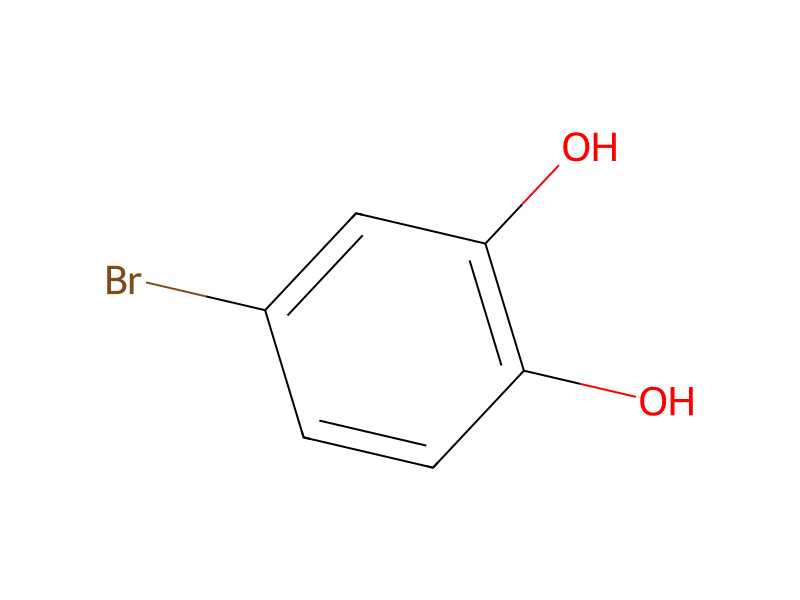
[H-].[Na+].[Br:3][C:4]1[CH:5]=[C:6]([OH:11])[C:7](=[CH:9][CH:10]=1)[OH:8].Cl.Cl[CH2:14][CH2:15][N:16]1[CH2:21][CH2:20][O:19][CH2:18][CH2:17]1.[OH2:22]>CN(C=O)C>[O:19]1[CH2:20][CH2:21][N:16]([CH2:15][CH2:14][O:11][C:6]2[CH:5]=[C:4]([Br:3])[CH:10]=[CH:9][C:7]=2[O:8][CH2:14][CH2:15][N:16]2[CH2:21][CH2:20][O:22][CH2:18][CH2:17]2)[CH2:17][CH2:18]1Participants





Procedure
864 mg (36.0 mmol) of sodium hydride was added to a suspension of 900 mg (5.0 mmol) of 4-bromocatechol and 3.72 g (20.0 mmol) of 2-chloroethylmorpholine hydrochloride in 50 ml of anhydrous DMF at 0° C. over 25 minutes. The mixture was stirred for 3 days at room temperature. 5 ml water was added to quench the reaction. After removal of the solvent, the black oily residue was adsorbed onto celite and the resulting solid washed with ethyl acetate. The filtrate was then concentrated to give 0.75 g (1.81 mmol; 36% yield) of 3,4-bis(2-morpholinoethoxy)bromobenzene as a hygroscopic yellow solid. 1H-NMR (CD3OD) δ: 8.42 [1H] d (2.0 Hz), 8.18 [1H] d (1.5 Hz), 7.64 [1H] s, 7.56 [1H] dd (1.5 Hz, 7.5 Hz), 7.30 [1H] dt (1.5 Hz, 7.5 Hz), 7.25 [1H] d (2.5 Hz), 7.19 [1H] dd (2.5 Hz, 8.5 Hz), 7.12 [1H] d (8.5 Hz), 7.08 [1H] d (8.5 Hz), 7.05 [1H] dt (1 Hz, 7.5 Hz) 4.25 [2H] t (5.75 Hz), 4.20 [2H] t (5.5 Hz), 3.72 [8H] m, 2.84 [4H] m, 2.66 [8H] m. MS: 559.2 [MH+].
Workup
- customto quench
- customthe reaction
- customAfter removal of the solvent
- washthe resulting solid washed with ethyl acetate
- concentrationThe filtrate was then concentrated
Sources & evidence
- ORD record
- ord-c9769baf5d054266bbcc3db7ebbadcf8
- Source dataset
- uspto-grants-2010_05
- Patent number
- US07709645B2
Reaction notes
Loading…