Triethylamine → HCID 52937164, compound
Reaction equation

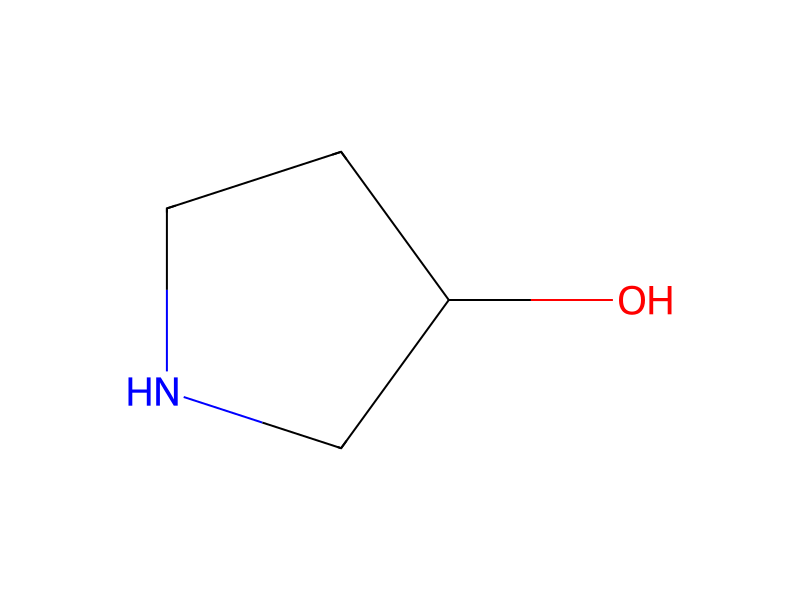
Cl[C:2]1[N:7]=[CH:6][C:5]([N+:8]([O-:10])=[O:9])=[CH:4][N:3]=1.[OH:11][CH:12]1[CH2:16][CH2:15][NH:14][CH2:13]1.C(N(CC)CC)C>C1COCC1>[N+:8]([C:5]1[CH:4]=[N:3][C:2]([N:14]2[CH2:15][CH2:16][CH:12]([OH:11])[CH2:13]2)=[N:7][CH:6]=1)([O-:10])=[O:9]Participants
Reactant 3


Product 1

Reagents, catalysts & solvents 1

Procedure
To a solution of 2-chloro-5-nitro-pyrimidine (638 mg, 4 mmol) in THF (15 mL) cooled to 0° C. was added 3-hydroxypyrrolidine (392 mg, 4.5 mmol) and triethylamine (1.2 mL). The mixture was stirred at room temperature overnight. Solids were filtered out and the solution was concentrated. The residue was dissolved in ethyl acetate and extracted with water. Organic layer was washed with dilute aqueous citric acid solution. After the evaporation of solvents, the residue was treated with ether and the yellow solid was filtered to give N-(5-nitro-pyrimidin-2-yl)-pyrrolidin-3-ol (570 mg). LCMS calcd for C8H10N4O3 m/e 210.19, obsd 211.0 (ES, M+H). Hydrogenation of the nitro compound, as above, provided N-(5-aminopyrimidin-2-yl)-pyrrolidin-3-ol.
Workup
- filtrationSolids were filtered out
- concentrationthe solution was concentrated
- dissolutionThe residue was dissolved in ethyl acetate
- extractionextracted with water
- washOrganic layer was washed with dilute aqueous citric acid solution
- customAfter the evaporation of solvents
- additionthe residue was treated with ether
- filtrationthe yellow solid was filtered
Sources & evidence
- ORD record
- ord-8be870efc7dd4760bece1dfa85a108a2
- Source dataset
- uspto-grants-2010_05
- Patent number
- US07714126B2
Reaction notes
Loading…