3,4-Dihydroxybenzaldehyde → HCID 59300255, compound
Reaction equation

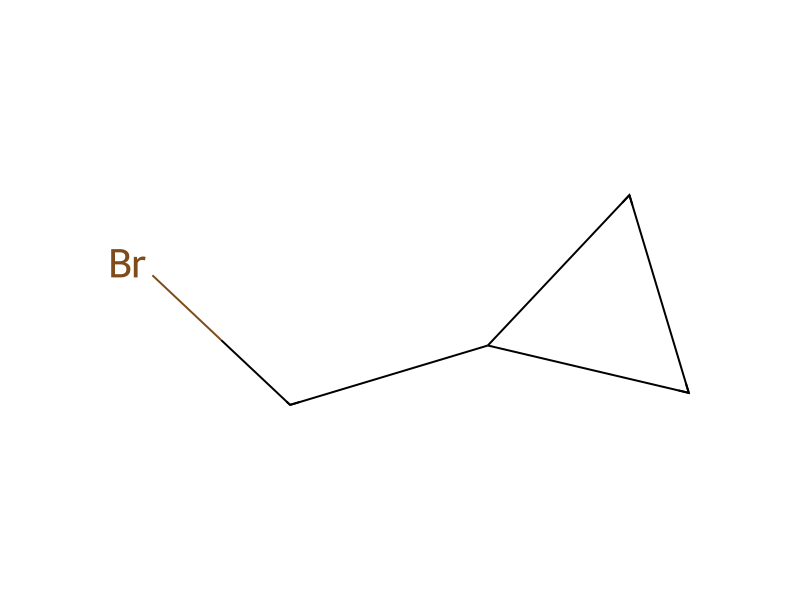
[OH:1][C:2]1[CH:3]=[C:4]([CH:7]=[CH:8][C:9]=1[OH:10])[CH:5]=[O:6].[CH:11]1([CH2:14]Br)[CH2:13][CH2:12]1.C(=O)([O-])[O-].[K+].[K+]>CC(C)=O>[CH:11]1([CH2:14][O:10][C:9]2[CH:8]=[CH:7][C:4]([CH:5]=[O:6])=[CH:3][C:2]=2[OH:1])[CH2:13][CH2:12]1Participants
5
Reactant 3


Product 1

Reagents, catalysts & solvents 1

Procedure
A mixture of 3,4-dihydroxybenzaldehyde (4.14 g, 30 mmol), cyclopropylmethyl bromide (3.06 mL, 31.5 mmol), potassium carbonate (8.29 g, 60 mmol) in acetone (90 mL) is heated at 50 C overnight. After filtration, the solution is dried to a gum, which is dissolved in ethyl acetate, and washed with water. It is dried to an oil and then chromatographed to yield 0.42 g (7%) of the title compound as a white powder. MS (ESI) m/z 191.2 (M−H)−1.
Workup
- temperatureis heated at 50 C overnight
- filtrationAfter filtration
- customthe solution is dried to a gum, which
- dissolutionis dissolved in ethyl acetate
- washwashed with water
- customIt is dried to an oil
- customchromatographed
Sources & evidence
- ORD record
- ord-8e74cfc9b1d348e4af98bebc6a0a92d2
- Source dataset
- uspto-grants-2010_05
- Patent number
- US07713994B2
Reaction notes
Loading…