Chloroform → HCID 19082620, compound
Reaction equation

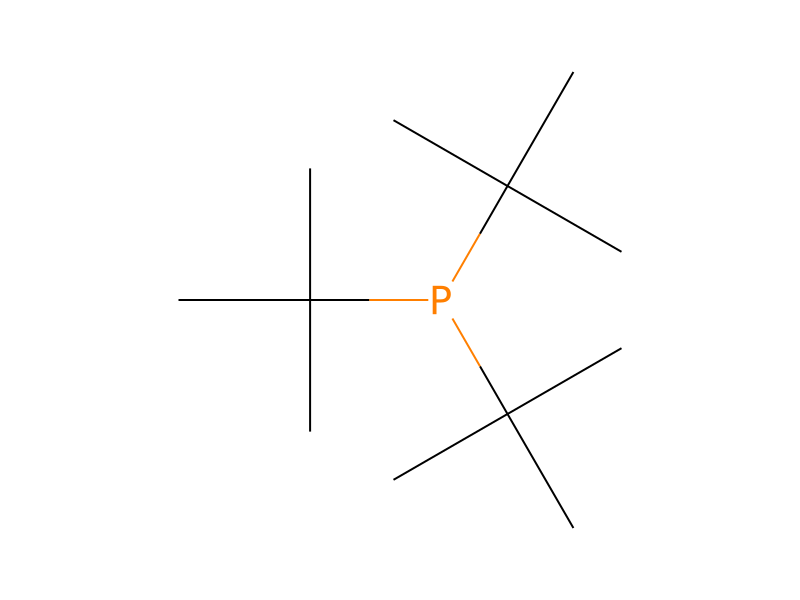
[Li+].C[Si]([N-:6][Si](C)(C)C)(C)C.C(Cl)(Cl)Cl.P(C(C)(C)C)(C(C)(C)C)C(C)(C)C.Br[C:29]1[CH:34]=[CH:33][C:32]([CH:35]([N:37]2[CH2:41][CH2:40][CH2:39][CH2:38]2)[CH3:36])=[CH:31][CH:30]=1>C1(C)C=CC=CC=1>[N:37]1([CH:35]([C:32]2[CH:33]=[CH:34][C:29]([NH2:6])=[CH:30][CH:31]=2)[CH3:36])[CH2:41][CH2:40][CH2:39][CH2:38]1Participants





Procedure
LiHMDS (1 mL, 1 M solution in THF, 1.0 mmol) is added to a 25 mL round bottom flask, THF is removed. Toluene (4 mL) is added followed by addition of Pd2(dba)3.CHCl3 (10 mg, 0.01 mmol) and P(tBu)3 (10 mg, 0.05 mmol). The mixture is degassed. 1-[1-(4-Bromo-phenyl)-ethyl]-pyrrolidine (330 mg, 1.3 mmol) in toluene (2 mL) is added to the flask. The resulting mixture is stirred at room temperature overnight. TLC is used to determine complete consumption of starting bromide, the reaction mixture is diluted with ether at this point and poured into dilute HCl (aq). The ether layer is discarded, the aqueous layer is basified with NH4OH and extracted with CH2Cl2. The CH2Cl2 layer is dried and concentrated. The residue is subjected to chromatography to provide the desired product 4-(1-Pyrrolidin-1-yl-ethyl)-phenylamine (60 mg, 24%). 1H NMR (300 MHz, CDCl3) ∂ 7.09-7.13(2H, m), 6.61-6.66 (2H, m), 3.47 (2H, br), 3.11 (1H, q, J=6.6 Hz), 2.52-2.58 (2H, m), 2.33-2.39 (2H, m), 1.73-1.79 (4H, m), 1.38 (3H, d, J=6.9 Hz). MS (ESI): 191 (M+1)+1.
Workup
- customTHF is removed
- additionToluene (4 mL) is added
- additionfollowed by addition of Pd2(dba)3
- customThe mixture is degassed
- customconsumption of starting bromide
- additionthe reaction mixture is diluted with ether at this point
- additionpoured into dilute HCl (aq)
- extractionextracted with CH2Cl2
- dry with materialThe CH2Cl2 layer is dried
- concentrationconcentrated
Sources & evidence
- ORD record
- ord-c66c7e0f1b9842a9bf9b821c2b233fda
- Source dataset
- uspto-grants-2010_05
- Patent number
- US07713994B2
Reaction notes
Loading…