Triisopropyl borate → 4-n-Octyloxyphenylboronic Acid (contains varying amounts of Anhydride)
Reaction equation

Br[C:2]1[CH:7]=[CH:6][C:5]([O:8][CH2:9][CH2:10][CH2:11][CH2:12][CH2:13][CH2:14][CH2:15][CH3:16])=[CH:4][CH:3]=1.C([Li])CCC.C([O:25][B:26](OC(C)C)[O:27]C(C)C)(C)C>O1CCCC1>[CH2:9]([O:8][C:5]1[CH:6]=[CH:7][C:2]([B:26]([OH:27])[OH:25])=[CH:3][CH:4]=1)[CH2:10][CH2:11][CH2:12][CH2:13][CH2:14][CH2:15][CH3:16]Participants




Conditions
- Temperature
- -78 °C
Procedure
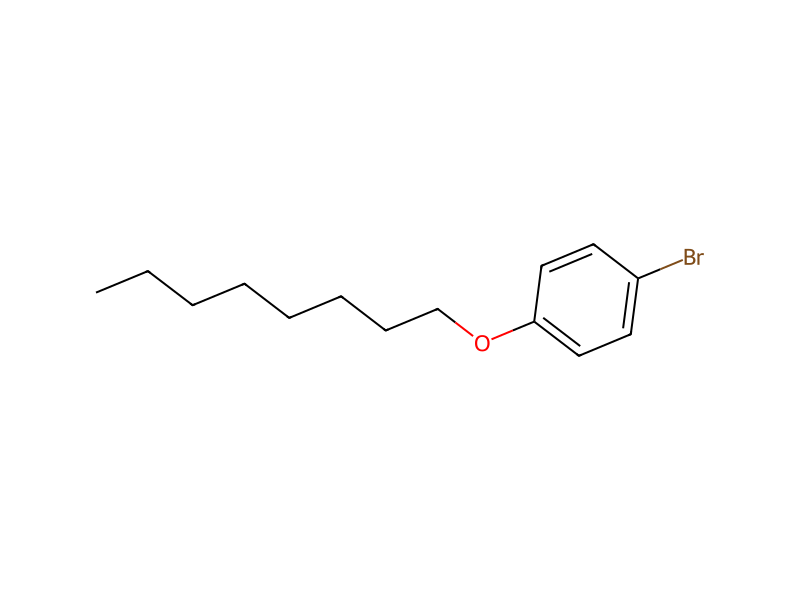
4-Bromo-octyloxybenzene (Compound 6, 31.5 g, 0.111 mol) was dissolved in 300 mL tetrahydrofuran. The solution was cooled to −78° C. in a cooling bath and n-butyllithium (55.3 mL of 2.5M solution, 0.138 mol) was added to it. After stirring for 25 minutes at −78° C., triisopropylborate (36.4 g, 0.194 mol) was added quickly with a syringe. The cooling bath was removed, and 90 minutes later, the solution was re-cooled to 0° C. 150 mL of a dilute HCl solution was added. After 30 minutes, ethyl ether was added to the reaction mixture and the organic layer was washed with water (2 times), dried with MgSO4, and concentrated to provide an oil, which slowly crystallized over time. This crystallized product was re-crystallized once from acetonitrile to provide a colorless solid, 4-octyloxy-phenylboronic acid (Compound 7, 20.5 g, 74%).
Workup
- customThe cooling bath was removed
- temperature90 minutes later, the solution was re-cooled to 0° C
- addition150 mL of a dilute HCl solution was added
- waitAfter 30 minutes
- additionethyl ether was added to the reaction mixture
- washthe organic layer was washed with water (2 times)
- dry with materialdried with MgSO4
- concentrationconcentrated
- customto provide an oil, which
- customslowly crystallized over time
- customThis crystallized product was re-crystallized once from acetonitrile
Sources & evidence
- ORD record
- ord-0262943aff6545e59270006d845656a2
- Source dataset
- uspto-grants-2010_03
- Patent number
- US07671083B2
Reaction notes
Loading…