Pyridine → 4-Nitro-N-(1,3-thiazol-2-yl)benzamide
Reaction equation

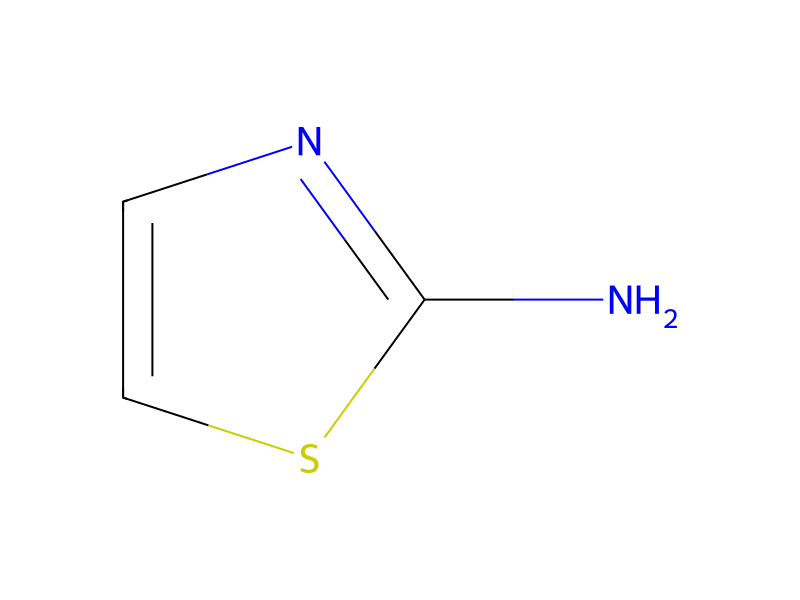
[NH2:1][C:2]1[S:3][CH:4]=[CH:5][N:6]=1.N1C=CC=CC=1.[N+:13]([C:16]1[CH:24]=[CH:23][C:19]([C:20](Cl)=[O:21])=[CH:18][CH:17]=1)([O-:15])=[O:14]>ClCCCl>[N+:13]([C:16]1[CH:17]=[CH:18][C:19]([C:20]([NH:1][C:2]2[S:3][CH:4]=[CH:5][N:6]=2)=[O:21])=[CH:23][CH:24]=1)([O-:15])=[O:14]Participants
5
Reactant 3


Product 1

Reagents, catalysts & solvents 1

Conditions
- Temperature
- 60 °C
Procedure
2-Aminothiazole (100 mmol) was suspended in 1,2-dichloroethane (200 mL) and pyridine (100 mmol) was added. The mixture was added portion wise to a suspension of 4-nitro benzoic acid chloride (150 mmol) in 1,2-dichloroethane (500 mL) and stirred at 60° C. over night. The reaction mixture was cooled and filtered. The filtrate was washed with 1,2-dichloroethane and dried in vacuo to give 4-nitro-N-thiazol-2-yl-benzamide.
Workup
- additionThe mixture was added portion
- temperatureThe reaction mixture was cooled
- filtrationfiltered
- washThe filtrate was washed with 1,2-dichloroethane
- customdried in vacuo
Sources & evidence
- ORD record
- ord-897392f68707407c831bba52d0a22bb6
- Source dataset
- uspto-grants-2010_03
- Patent number
- US07674912B2
Reaction notes
Loading…