Acetic Acid → HCID 58815898, compound
Reaction equation

[CH2:1]([O:3][C:4](=[O:36])[CH2:5][N:6]1[CH2:11][CH2:10][N:9]([C:12](=[O:35])[C:13]2[CH:18]=[CH:17][CH:16]=[C:15]([C@@H:19]([N:27]3[CH2:32][C@@H:31]([CH3:33])[NH:30][CH2:29][C@@H:28]3[CH3:34])[C:20]3[CH:25]=[CH:24][CH:23]=[C:22]([OH:26])[CH:21]=3)[CH:14]=2)[CH2:8][CH2:7]1)[CH3:2].[F:37][C:38]1[CH:39]=[C:40]([CH:43]=[CH:44][CH:45]=1)[CH:41]=O.C(O)(=O)C.C(O[BH-](OC(=O)C)OC(=O)C)(=O)C.[Na+]>O1CCCC1>[CH2:1]([O:3][C:4](=[O:36])[CH2:5][N:6]1[CH2:11][CH2:10][N:9]([C:12](=[O:35])[C:13]2[CH:18]=[CH:17][CH:16]=[C:15]([C@@H:19]([N:27]3[CH2:32][C@@H:31]([CH3:33])[N:30]([CH2:41][C:40]4[CH:43]=[CH:44][CH:45]=[C:38]([F:37])[CH:39]=4)[CH2:29][C@@H:28]3[CH3:34])[C:20]3[CH:25]=[CH:24][CH:23]=[C:22]([OH:26])[CH:21]=3)[CH:14]=2)[CH2:8][CH2:7]1)[CH3:2]Participants
Reactant 4

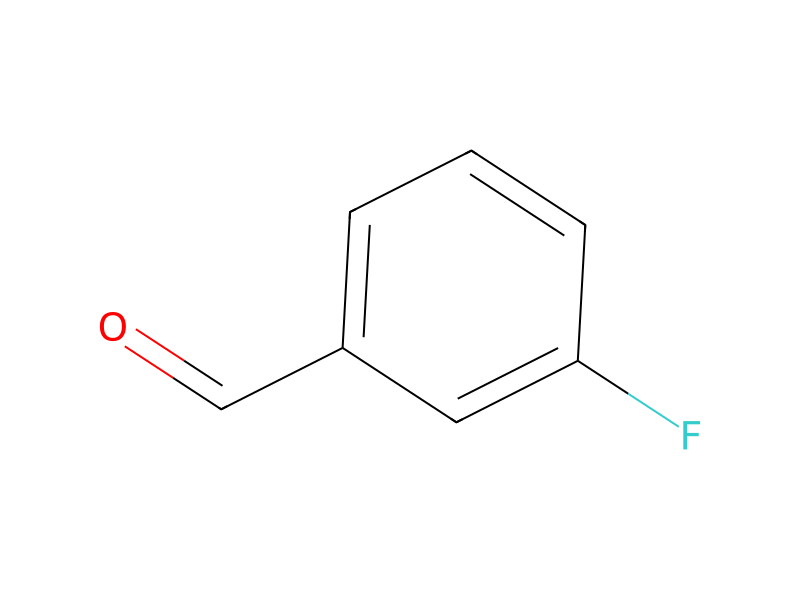


Product 1

Reagents, catalysts & solvents 1

Procedure
The above free amine (1.23 g, 2.49 mmol, Example 65) and 3-fluorobenzaldehyde (0.62 g, 4.98 mmol) were placed in a 100 mL flask and sealed under nitrogen. Tetrahydrofuran (40 mL) and 0.31 mL of acetic acid (5.47 mmol, 2.20 equiv.) was added. The reaction was stirred at room temperature for 20 minutes, and then sodium triacetoxyborohydride (1.32 g, 6.22 mmol) was added and stirred overnight. The reaction solution was concentrated under reduced pressure. The residue was partitioned between ethyl acetate (50 mL) and saturated sodium hydrogencarbonate (25 mL). The organic layer was washed with brine, dried over Na2SO4 and concentrated under reduced pressure. The residual dark brown oil (2.01 g) was purified by chromatography on a Biotage column (SiO2-F Flash Cartridge, 8 g, 32-63 μm, 60 A) eluting first with dichloromethane to remove the less polar contaminant, then using 2.5% methanol in dichloromethane. The desired fractions were combined and the solvent was removed under reduced pressure. The title product (4-{3-[(R)-[(2S,5R)-4-(3-fluoro-benzyl)-2,5-dimethyl-piperazin-1-yl]-(3-hydroxy-phenyl)-methyl]-benzoyl}-piperazin-1-yl)-acetic acid ethyl ester was obtained as a light yellow solid (0.75 g, 50%). 1H NMR (300 MHz, d6-DMSO): □ 0.81-1.01 (m, 6H); 1.14-1.19 (t, 3H), 1.89-2.01 (m, 2H); 2.48 (s, 4H); 2.57-2.66 (m, 4H); 3.24 (s, 2H); 3.29-3.36 (m, 4H); 3.50-3.56 (m, 1H); 3.71-3.76 (dd, 1H); 4.03-4.10 (q, 2H); 4.94 (s, 1H); 6.62-6.71 (m, 3H); 6.97-7.19 (m, 4H); 7.29-7.43 (m, 5H); 9.35 (s, 1H). Calculated for C35H43FN4O4.0.12 CH2Cl2: C, 68.82; H, 7.11; N, 9.14; F, 3.10. Found: C, 68.85; H, 7.17; N, 9.11; F, 3.18.
Workup
- customsealed under nitrogen
- stirringstirred overnight
- concentrationThe reaction solution was concentrated under reduced pressure
- customThe residue was partitioned between ethyl acetate (50 mL) and saturated sodium hydrogencarbonate (25 mL)
- washThe organic layer was washed with brine
- dry with materialdried over Na2SO4
- concentrationconcentrated under reduced pressure
- customThe residual dark brown oil (2.01 g) was purified by chromatography on a Biotage column (SiO2-F Flash Cartridge, 8 g, 32-63 μm, 60 A)
- washeluting first with dichloromethane
- customto remove the less polar contaminant
- customthe solvent was removed under reduced pressure
Sources & evidence
- ORD record
- ord-31a2a2cb769b4fcca8c1ba4c214d70ba
- Source dataset
- uspto-grants-2010_03
- Patent number
- US07683168B2
Reaction notes
Loading…